
On this page
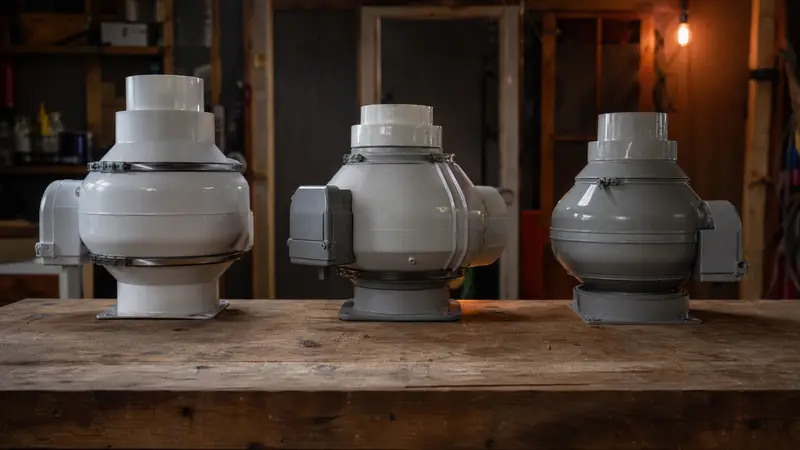
The best radon mitigation fan is the one matched to the soil under your slab. RadonAway, Fantech and Festa all make reliable fans built for nonstop radon use. A low-suction model fits homes with gravel under the slab, while tight soil needs a high-suction fan. A diagnostic test before radon system installation tells your installer which one fits.
Why "best" depends on your house
Radon fans are not one size fits all. Each model is built for a range of conditions, and the job is to match the fan to the house.
Two things matter most:
- Airflow. How much air the fan moves, measured in cubic feet per minute (CFM). Homes with loose gravel under the slab need more airflow, because air moves easily and leaks in from many directions.
- Suction (static pressure). How hard the fan can pull, measured in inches of water column. Homes with tight soil, clay or no gravel layer need more suction to pull soil gas through.
A fan with high airflow but weak suction will struggle in tight soil. A high-suction fan in gravel soil may use more power than needed and make more noise. That is why the diagnostic test, which checks how air moves under your slab, comes before picking a fan.
The three brands most installers use
RadonAway
RadonAway is one of the most widely used radon fan brands in the U.S. Its RP series covers most homes:
- RP140: a low-power, low-suction fan for homes with good airflow under the slab. RadonAway spec sheets list it at roughly 15 to 21 watts.
- RP145: a popular general-purpose 4-inch fan with more airflow. RadonAway spec sheets list it at roughly 35 to 72 watts.
- RP260 and RP265: 6-inch fans for larger homes or more airflow. The RP265 draws roughly 90 to 140 watts.
- GP series: high-suction fans for tight soil, where the fan has to pull hard against resistance.
RadonAway also makes the XP and XR lines for in-between cases. Wattage ranges vary a little between spec sheet versions, so check the fan label or RadonAway's current spec sheet for exact figures. RadonAway lists a five-year limited warranty on its fans.
Fantech
Fantech, now part of Systemair, has made inline fans for years. Its current radon lineup is the Rn series: the Rn1, Rn2 and Rn3, plus the adjustable-speed Rn2EC and Rn4EC. Many older systems still run Fantech's earlier HP series fans, such as the HP2190. Fantech fans are known for strong airflow. Some reviewers note certain HP models run a bit louder than competing fans. Fantech backs its Rn fans with a 5-year factory warranty.
Festa
Festa Radon Technologies is a newer name that has grown quickly with mitigators. Its AMG line includes standard AC fans such as the Maverick, Hawk, Prowler, Eagle and Legend, plus EC motor versions such as the Maverick EC and Eagle Extreme. Festa housings are made of glass-reinforced poly resin, and the line is marketed for quiet running and easy installs. Festa lists a 5-year warranty on its AC fans and a 7-year warranty on its EC fans.
How the brands compare
| Brand | Known for | Common models | Good to know |
|---|---|---|---|
| RadonAway | Wide range, long track record | RP140, RP145, RP265, GP series | Very common; parts and replacements easy to find |
| Fantech | Strong airflow | Rn series, HP series | Some models can be a little louder |
| Festa | Newer designs, quiet running | AMG Eagle, Legend, Maverick | Growing fast with installers |
All three brands make fans rated for continuous outdoor or attic use. In practice, the right model within any brand matters more than the brand itself.
What to look for in a radon fan
Rated for radon use
Use a fan designed for radon. These have sealed housings so soil gas cannot leak out on the pushing side. Standard bathroom or duct fans are not built for this.
Matched to your diagnostic
Your installer should pick a fan based on the test holes drilled in your slab, not on a habit of using one model everywhere.
Energy use
Fans run 24 hours a day, so wattage adds up. A fan rated at 20 watts uses far less power than one rated at 140. The right fan is the smallest one that gets the job done.
Noise
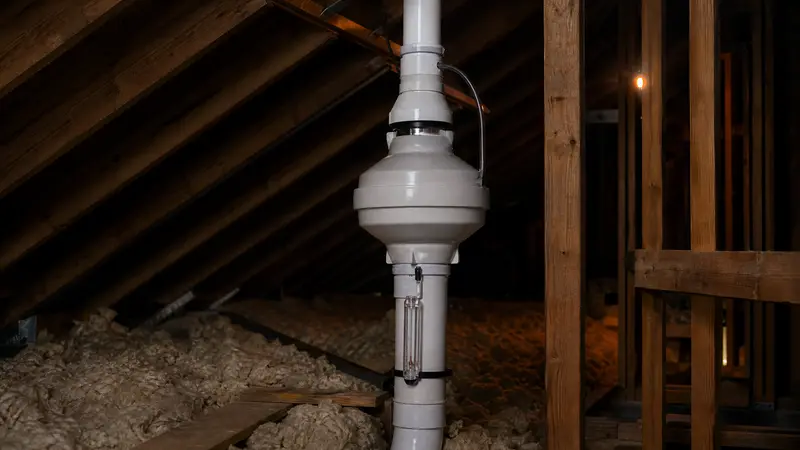
Most radon fans are quiet when mounted well, but they are not silent. Noise depends on the fan, the mounting and the airflow. Mounting the fan outside or in an attic away from bedrooms helps. Rubber couplings and solid supports keep vibration from spreading into the house.
Warranty and service
Check the current manufacturer warranty, and ask your installer what their own labor warranty covers. A common brand also makes future replacement easier.
Where the fan goes
Pennsylvania standards do not allow radon fans in basements, crawl spaces or living spaces. The fan must be outside, or in an attic or garage that is not living space. This keeps any leak on the pushing side of the fan from blowing radon into your rooms.
Finished basements often decide the fan location and pipe route. If you are working around drywall and flooring, read radon mitigation in a finished basement for how installers plan around it.
How long radon fans last
Fans run nonstop, so they do wear out. Many last five years or longer, and some run much longer. Signs a fan is failing include a manometer reading that drops toward zero, new grinding or rattling, or a fan that will not start.
When a fan fails, the replacement is usually a simple swap if the same size is available. If the original fan was too weak or too strong, it is a good time to reconsider the model.
Can you just buy the "best" fan online?
You can buy radon fans online, and Pennsylvania lets homeowners mitigate their own homes. But the fan is only one part of the system. Suction point placement, sealing, pipe size and discharge location all affect results. A powerful fan cannot make up for a suction point in the wrong spot.
The EPA recommends using a qualified mitigation contractor, since lowering high radon takes specific skills. See the EPA's radon page for more.
Key takeaways
- The best radon fan is the one matched to the soil under your slab.
- RadonAway, Fantech and Festa all make reliable radon fans.
- Airflow and suction matter more than the brand name.
- Fans must be outside or in a non-living attic or garage in Pennsylvania.
- A diagnostic test before install is the best way to choose a fan.
Frequently Asked Questions
Which radon fan is the quietest?
Mounting matters more than the model. A fan outside or in an attic, with rubber couplings and solid supports, is quiet for most homes.
How much does it cost to run a radon fan?
It depends on the fan's wattage and your electric rate. Low-power fans cost little each month; high-suction fans cost more.
Can I upgrade my radon fan to a bigger one?
Yes, if testing shows the current fan is not enough. A bigger fan is not always better, though, so check suction readings first.
Get the right fan for your home
We pick each fan based on a diagnostic test at your house, not a default model. Call (717) 356-3035 any time for a free written quote and a same-day callback.