On this page
- What our radon fan replacement and repair service includes
- Signs your radon system needs repair
- Our repair process
- Repair options compared
- What affects the price of a fan replacement
- Keeping your system running between visits
- Radon systems in York homes
- Why choose us for radon system repair
- Frequently Asked Questions
- Get your radon system running again
If your radon fan has stopped, started grinding, or set off its alarm, we can fix it. We handle radon fan replacement in York, PA for any brand of fan and any installer's system, and we finish with a test so you know your levels are back under control. Call (717) 356-3035 any time for a same-day callback and a free written quote.
A radon system only protects you while the fan runs. Fans wear out, pipes shift and alarms fail. As part of our York County radon mitigation work, we keep existing systems doing their job. We are DEP-Certified Installers.
What our radon fan replacement and repair service includes
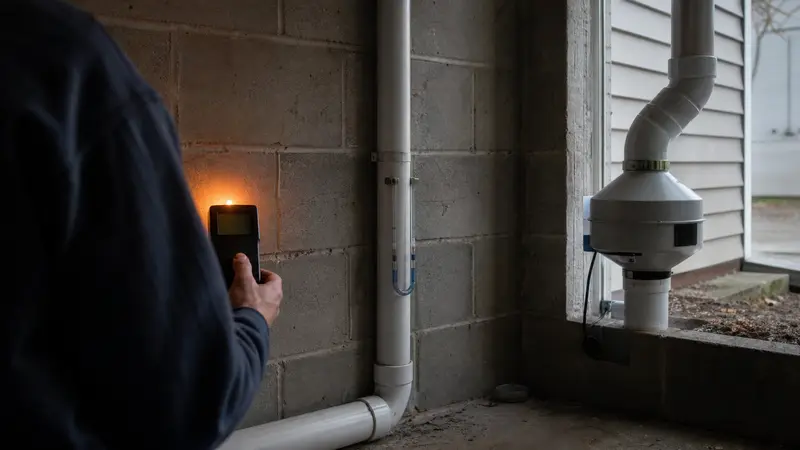
Every service call starts with a full system check, not just a fan swap. Here is what we look at and fix:
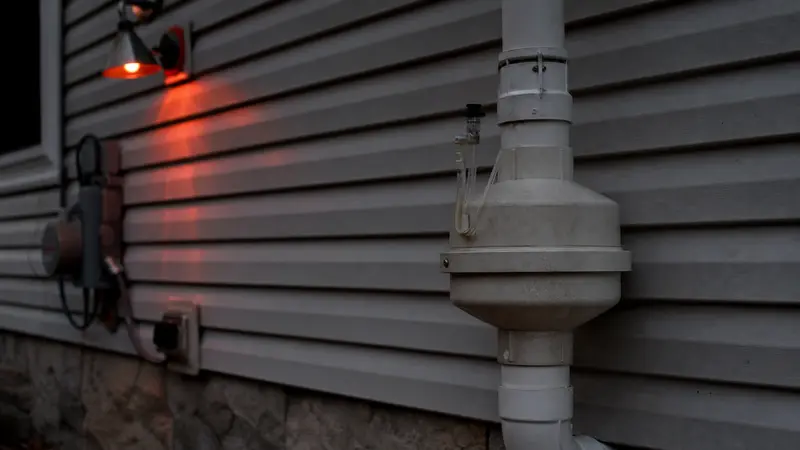
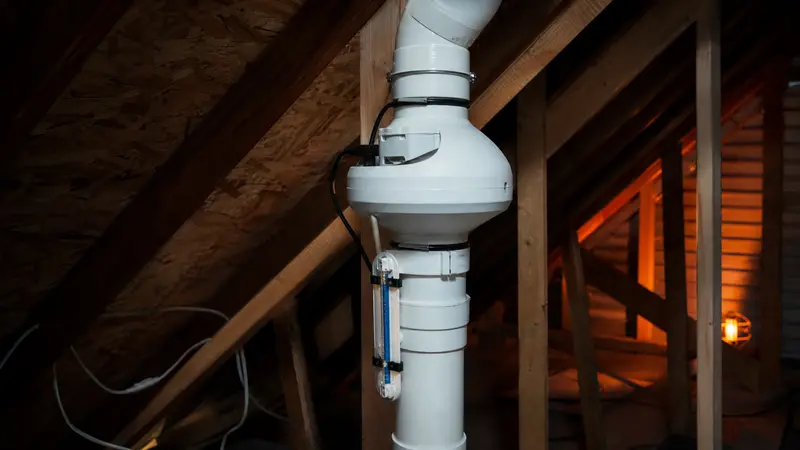
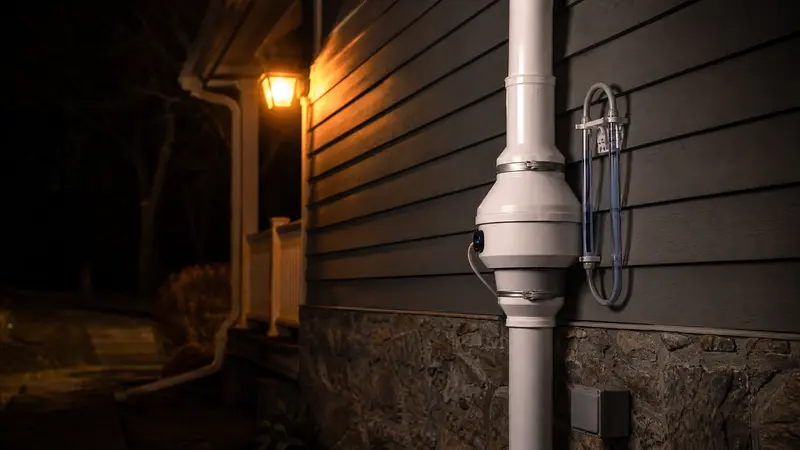
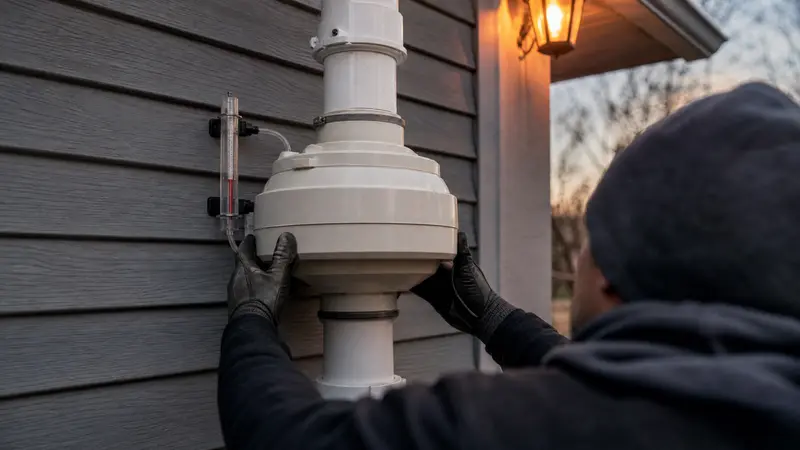
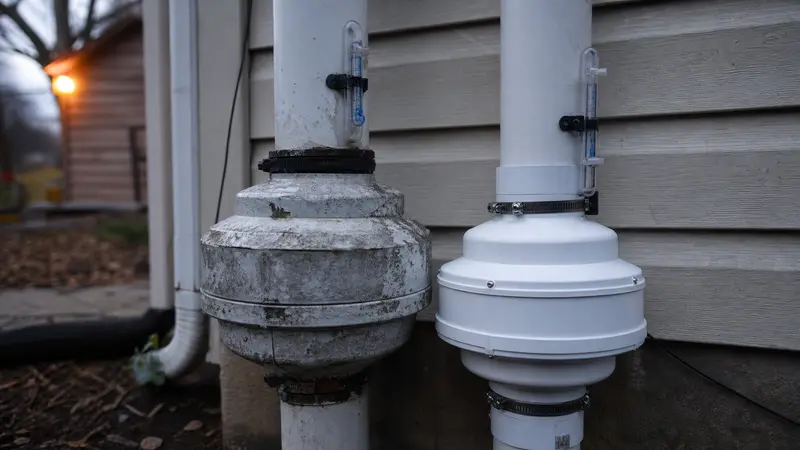
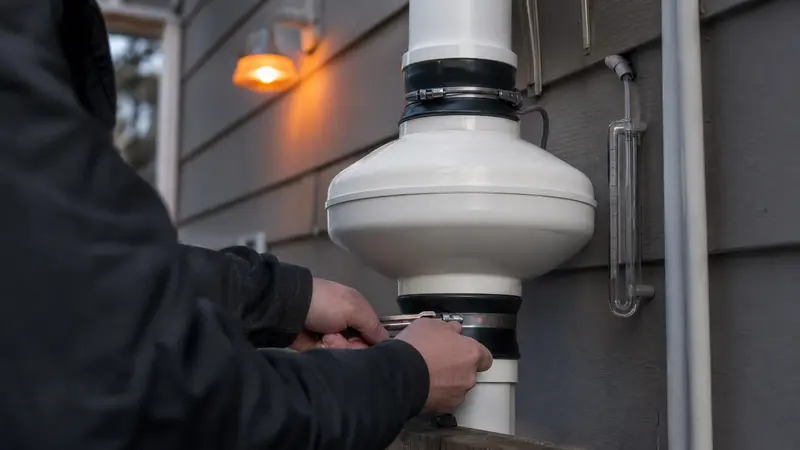
- The fan. We confirm power, listen for bearing noise, and check whether the fan is sized right for your home. If it has failed, we replace it with a fan matched to your system's suction needs.
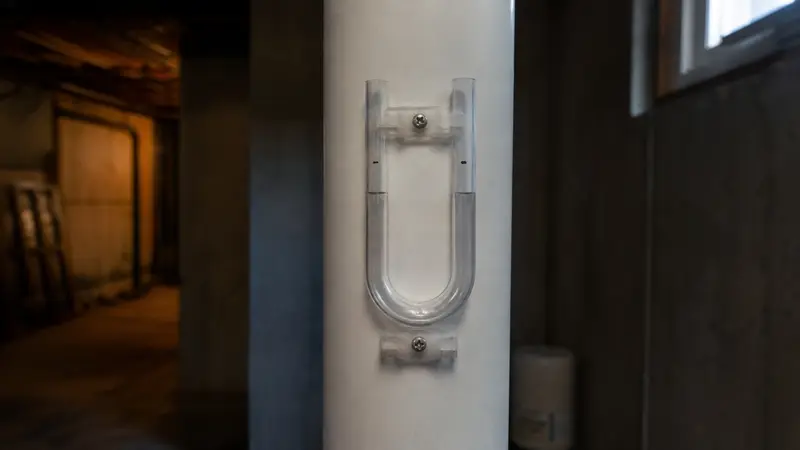
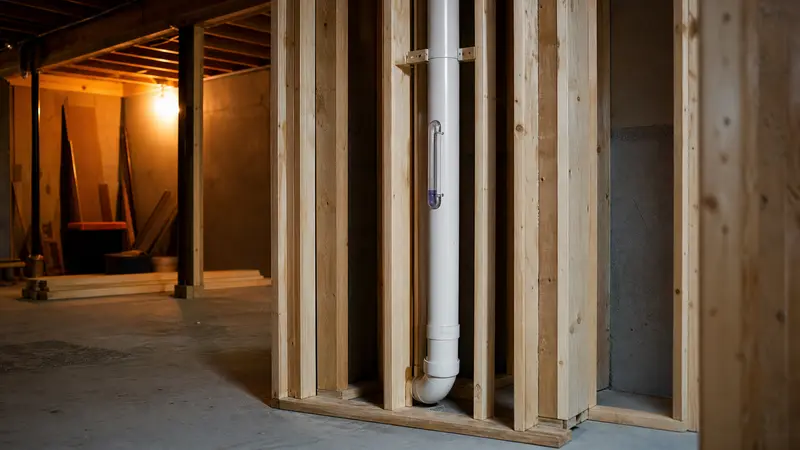
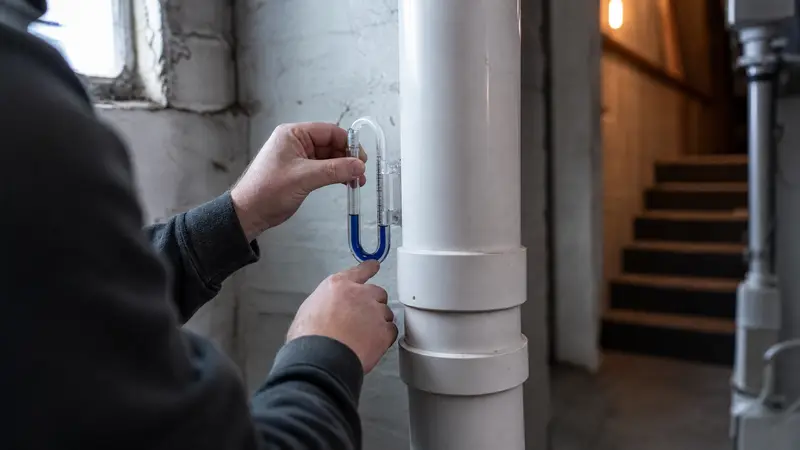
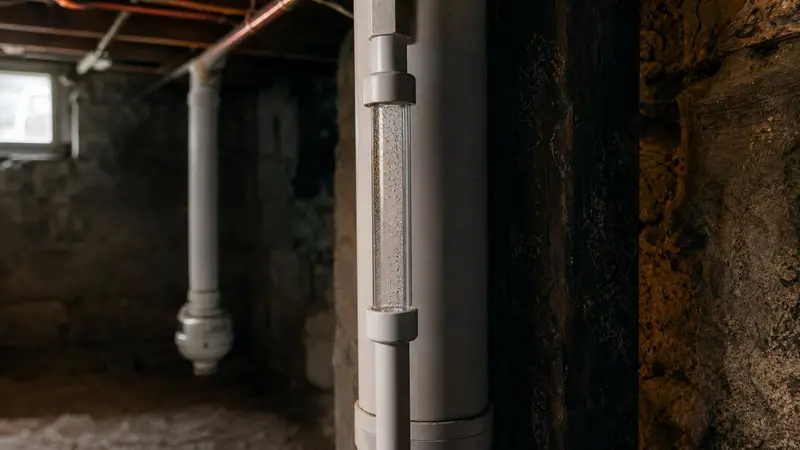
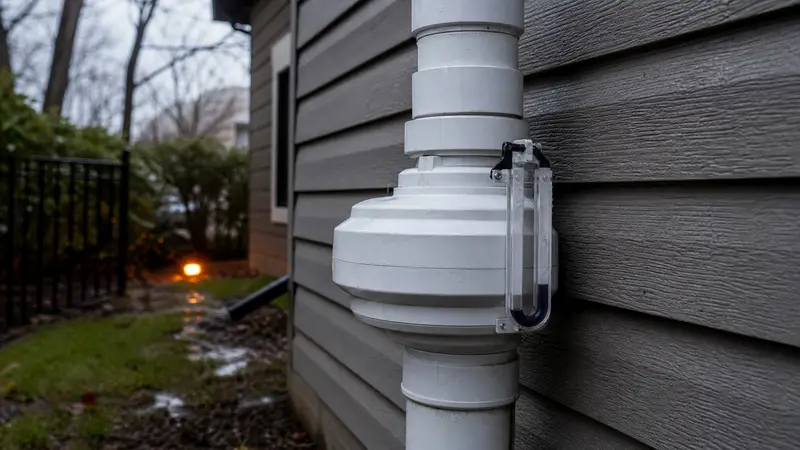
- The manometer (U-tube gauge). We check that it reads, that the tubing is not cracked or kinked, and we mark a new baseline after any change.
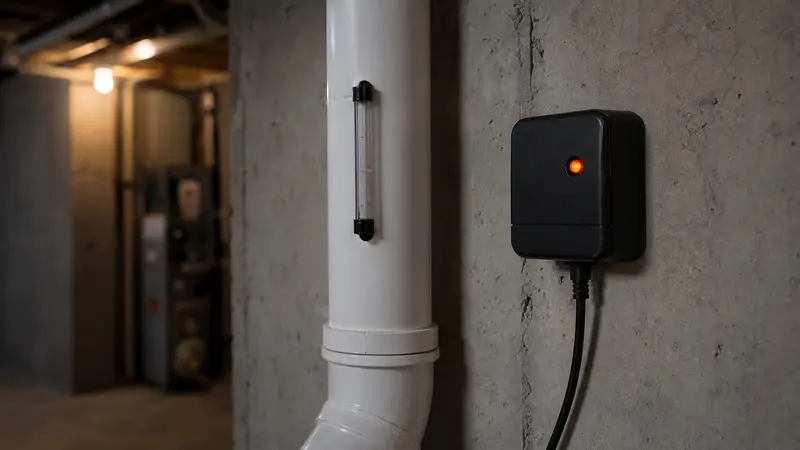
- The alarm. Pressure alarms can fail or drift. We test them and replace them if needed.
- The piping. We look for cracked joints, loose couplings, sagging runs that trap water, and pipe that slopes the wrong way.
- The exhaust. We check that the discharge point is clear of ice, nests and debris and meets current placement rules.
We also repair systems we did not install.
Signs your radon system needs repair
You do not need to be an expert to spot a problem. Watch for these signs:
- The manometer liquid is level (both sides even). This usually means no suction.
- The fan is silent when you stand near it, or it hums but does not move air.
- New noise: grinding, rattling, whining or a buzz that carries into the house.
- The alarm is sounding or its light has changed color.
- Water is pooling or gurgling loudly in the pipe.
- A new radon test came back high, even though the system seems to run.
- The fan is old. EPA's Consumer's Guide to Radon Reduction notes fans may last five years or more and then need repair or replacement.
If you see any of these, start with our guide on radon fan not working: troubleshooting. If a quick check does not fix it, call us.
Our repair process
- Call. Tell us what you are seeing. We call back the same day and ask a few questions (fan location, gauge reading, alarm status).
- On-site diagnosis. We inspect the fan, gauge, alarm, piping and exhaust, then explain what is wrong in plain terms.
- Free written quote. You get the price in writing before any work starts.
- Repair or replacement. Most fan swaps and repairs are done in a single visit.
- Verify suction. We check the new manometer reading and update the system label.
- Retest. We recommend a follow-up radon test no sooner than 24 hours after the fan is back on, in line with EPA guidance.
Repair options compared
Not every problem needs a new fan. This table shows the common fixes and when each one fits.
| Problem | Typical fix | When it fits |
|---|---|---|
| Fan dead or seized | Replace fan with a matched model | Fan has no power or will not spin with power present |
| Fan loud from vibration | Reseat fan, replace rubber couplings, add support | Fan still works but shakes or transmits noise |
| Fan worn but running | Replace fan before it fails | Bearing noise, weak suction, fan well past warranty |
| Gauge reads zero, fan runs | Clear blockage, repair pipe, fix gauge tubing | Ice, debris, cracked joint or kinked tube |
| Water trapped in pipe | Re-slope or re-support piping | Sagging runs or pipe pitched away from the slab |
| Alarm faulty | Test, reset or replace the alarm | Alarm sounds while gauge shows normal suction |
| Levels high with good suction | Add suction point, seal openings, upsize fan | Home changed or system was undersized |
What affects the price of a fan replacement
Our price depends on what we find on site. The main factors are:
- Fan model. Fans come in different sizes. A home with tight soil under the slab may need a higher-suction fan than a home with loose gravel.
- Fan location. An exterior fan at ground level is easier to reach than one in a tight attic or high on a gable wall.
- Pipe condition. Cracked or poorly sloped pipe adds parts and time.
- Alarm or gauge work. Adding or replacing a monitor adds to the job.
National cost guides such as Angi put a standard radon fan replacement at roughly $200 to $600. Our fan replacement range is $935 to $1,320, and a written on-site quote sets the real number. For whole-system pricing, see our page on radon mitigation cost in York.
If your system cannot be saved, or your home never had one that worked, our radon mitigation system installation service covers a full new system.
Keeping your system running between visits
A quick monthly look at the gauge catches most problems early. Our radon system maintenance checklist walks you through what to check each month, each season and every two years.
Planning to finish your basement? Pipes and fans often need to move during the work. Read about moving a radon system during a basement remodel before your contractor starts framing.
Radon systems in York homes
York County sits in EPA Radon Zone 1, the group of counties with the highest predicted indoor radon levels. See the EPA map of radon zones. PA DEP reports that the average Pennsylvania home tests at about 7 to 8 pCi/L, well above the EPA action level of 4.0 pCi/L. That means a failed fan in York is not a small problem. Without suction, levels can climb back toward where they started.
Many York homes have had systems for years, which means many fans are reaching the end of their working life. Our winters add wear too. Exterior fans and exhaust pipes face freezing temperatures, and condensation in the pipe is heaviest in cold weather. Ice at the discharge or in a sagging run can choke off airflow.
Pennsylvania law also matters here. Under the Radon Certification Act and 25 Pa. Code Chapter 240, anyone who mitigates radon in a home they do not own or live in must be certified by PA DEP. You can check any contractor's status through the PA DEP Radon Division.
Why choose us for radon system repair
DEP-Certified Installers
Every repair is done under Pennsylvania DEP certification. State rules require certification for anyone who mitigates radon for others, and certified work must follow recognized standards for fan placement, exhaust location, pipe slope and labeling. When we replace a fan, we check the whole system against those standards. If something about your old installation is out of line, we tell you in writing and explain what it would take to correct it.
A written clearance guarantee
Repairs come with the same promise as our new installs. If your clearance test after our work is not below 4.0 pCi/L, we keep working at no charge until it is. That guarantee is in writing, and you can read the details in our clearance guarantee. A fan swap is only worth paying for if it brings your levels back down, so we measure the result instead of assuming it.
Any brand, any installer, open 24 hours
We work on systems from any installer and fans from the major makers. You do not need to track down the company that put in your system. We are open 24 hours, so you can call when the alarm goes off at night or on a weekend. We call back the same day, give you a free written quote, and finish most repairs in a single visit.
Frequently Asked Questions
How long does a radon fan last?
Many radon fans run about 5 to 10 years, and some last longer. Common failure signs are a level manometer, grinding noise or an alarm. RadonAway and Fantech both offer five-year limited warranties on their radon fans. Learn more about how long a radon fan lasts and what shortens fan life.
How much does fan replacement cost?
Our fan replacement range is $935 to $1,320, and a free written quote sets your exact price. The cost changes with the fan model your system needs, how easy the fan is to reach, and whether it sits outside or in the attic. See our breakdown of radon fan replacement cost for details.
Why is my manometer reading zero (level liquid)?
A level manometer usually means the fan has stopped or the pipe is blocked. Check the breaker and outlet, listen at the fan, and look for ice at the exhaust. If the fan has power but the liquid stays level, call us. Our guide to radon manometer readings explained covers what each reading means.
Why is my radon fan loud or vibrating?
The most common causes are worn bearings, poor mounting that lets the fan shake against framing, ice or debris in the housing, or a fan sized wrong for the job. Some noise is fixable without a new fan. Our article on radon fan noise: causes and fixes explains how to tell which problem you have.
Why is there water or gurgling in my radon pipe?
Some water is normal. Moist soil gas condenses in the cool pipe and is designed to drain back down under the slab. Constant loud gurgling can mean a section of pipe is sloped wrong or a high water table is involved. Read more about water or gurgling in a radon pipe.
Should the radon fan run all the time?
Yes. A radon system is designed to run continuously, all day and all year. If you turn it off, radon can start building back up within hours. The fan uses about as much power as a light bulb or two. See should a radon fan run all the time for the full answer.
My radon alarm is going off. What now?
A radon system alarm watches the suction in your pipe and sounds when it drops. Check the breaker, the fan outlet and the exhaust for ice or blockage, then look at the manometer. If the fan is silent or suction stays low, the fan likely needs replacing. Our guide to a radon system alarm going off walks through each step.
How often should I retest after a repair or mitigation?
Retest after any repair, no sooner than 24 hours after the fan is back on. After that, EPA advises testing at least every two years and after major renovations, such as finishing a basement. Our guide to retesting after radon mitigation covers timing and test types.
Get your radon system running again
A quiet or failed fan means radon is building back up in your home. Call (717) 356-3035 any time, or send us a message. We call back the same day, give you a free written quote, and finish most fan replacements in a single visit.