On this page
Radon mitigation system maintenance is mostly simple checking. Look at the manometer once a month, listen to the fan, check the exhaust for ice or debris in winter, and retest your home at least every two years. Fans wear out over time, so plan for replacing your radon fan at some point. Here is a full checklist.
Why maintenance matters
A radon system protects you only while it runs. Fans wear out, pipe joints can crack, and contractors can bump things during other work. EPA's Consumer's Guide to Radon Reduction notes that fans "may last for five years or more" and may then need repair or replacement.
The good news is that most problems are easy to spot if you check regularly.
Monthly checks
These take about two minutes.
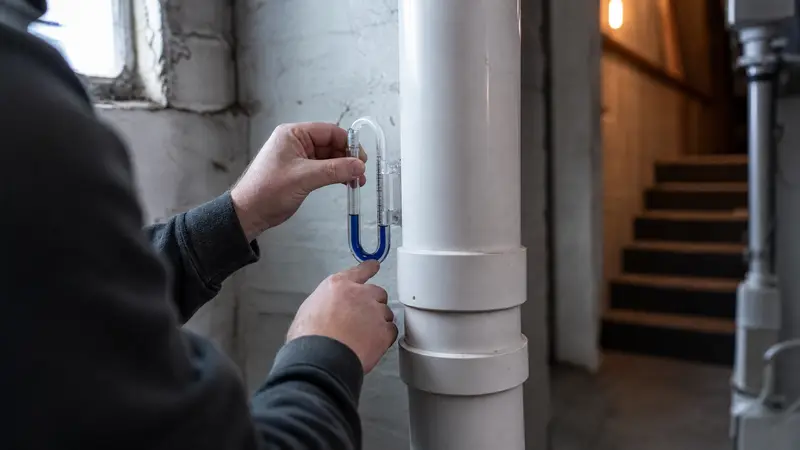
- Read the manometer. The U-tube liquid should sit at or near the mark your installer set. Level liquid means no suction.
- Check the alarm. Make sure its light shows normal and it is plugged in.
- Look at the pipe. Check for loose hangers, cracked joints or water pooling.
Recognized standards call for a system label that lists the installer and advises regular checks. If your label is missing, write the normal gauge reading on a piece of tape next to it.
Seasonal checks
Fall
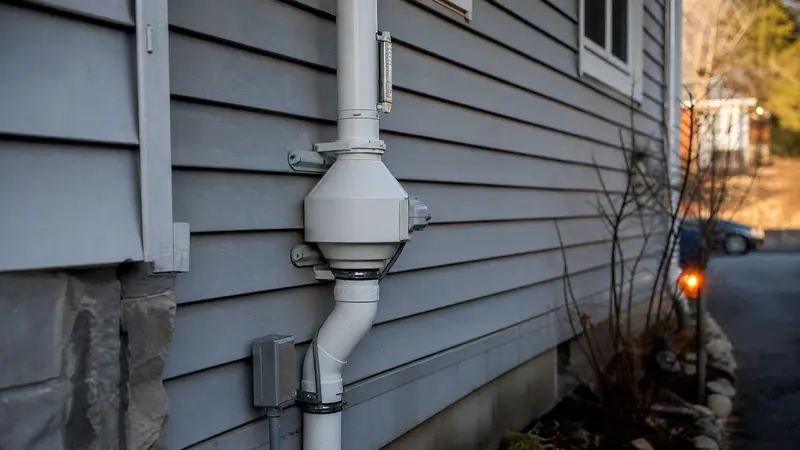
- Clear leaves and debris near the exhaust and any exterior fan.
- Check the fan mounting. Couplings should be snug and the fan should not shake.
- Listen for new noises before winter makes the fan work in the cold.
Winter
- Check the exhaust for ice on cold mornings, from the ground.
- Watch the gauge after very cold nights. A drop can mean ice in the pipe.
- Listen for gurgling, which can mean water is trapped in a low spot.
Spring
- Look for nests at the exhaust and around exterior fans.
- Check sealing at the suction point, sump lid and slab cracks.
Summer
- Check attic fans for heat stress. A fan that cycles on and off may be overheating.
- Make sure nothing is stored against the fan in the attic or garage.
Every two years
- Retest your home. EPA advises retesting at least every two years to confirm levels are still low. Learn the timing in our guide to retesting after radon mitigation.
- Review fan age. Most fans last about 5 to 10 years. If yours is in that range and showing signs of wear, plan for replacement.
After any change to your home
Retest after:
- A basement remodel or finish.
- New plumbing, drains or sump work through the slab.
- An addition or a major change to your heating or cooling system.
- Any repair to the radon system itself.
Test no sooner than 24 hours after the system is back in normal operation.
What not to do
- Do not turn the fan off to save power or reduce noise.
- Do not cover or wrap the fan. It needs airflow to stay cool.
- Do not add a rain cap without asking a mitigator. Some caps restrict airflow or trap ice.
- Do not drill into the pipe. A hole lets soil gas into your home.
- Do not unplug the alarm if it beeps. Find out why.
Maintenance in York homes
York County sits in EPA Radon Zone 1, the highest-potential group. See the EPA radon page for background. Many York homes have had systems for years, and our freezing winters add stress to exterior fans and pipes. A few minutes a month is the easiest way to catch a problem before radon builds back up.
Key takeaways
- Read the manometer monthly.
- Check the exhaust for ice and debris each winter and spring.
- Retest at least every two years and after major changes.
- Never turn off, wrap or drill into the system.
- Plan for a fan replacement as the fan ages.
Frequently Asked Questions
Does a radon system need yearly service?
No set yearly service is required. Monthly gauge checks and a test every two years cover most homes. Call a pro if anything changes.
Do I need to clean the radon fan?
No. Radon fans are sealed units. Keep the exhaust and the area around the fan clear.
Who should I call if the original installer is gone?
Any PA DEP-certified mitigator can service your system.
Need help with your system?
If your check turns up a problem, we can fix it. We offer radon fan replacement in York and repairs for any brand of system. Call (717) 356-3035 any time for a same-day callback.