On this page
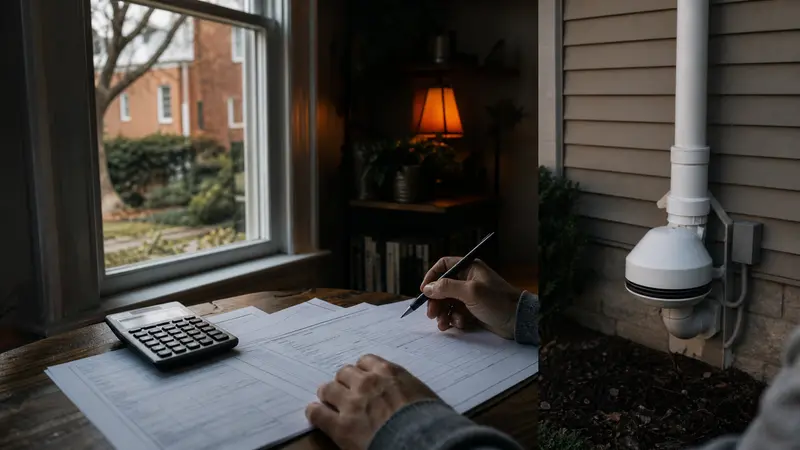
Radon mitigation cost in York, PA depends mostly on your foundation, how many suction points the house needs, and where the pipe can run. Our standard sub-slab system is priced at $935 to $1,320, and every job starts with a free written quote after we see the house. National cost guides put most systems somewhere between about $800 and $2,000, and the rest of this page explains where your home is likely to land.
As a DEP-Certified Installers team and a radon mitigation company in York, we price every job in writing before any work starts. Call (717) 356-3035 any time for a same-day callback.
What published cost guides say
You will see a few different numbers online. Here is what the main published guides report, so you can compare them with any quote you get:
- National cost guides such as Angi list a typical range of about $805 to $1,326, with a national average near $1,043.
- HomeGuide reports that most active soil depressurization systems run about $1,200 to $2,000 installed, with larger homes reaching $2,500 or more.
- PA Radon Hub, a Pennsylvania-focused site, cites a statewide range of roughly $843 to $2,529.
These are averages, not quotes. A written on-site quote is what sets the real number for your house. Our own pricing is $935 to $1,320 for a standard single-suction-point system, and we explain every line on the quote.
What is included in the price
A complete radon mitigation price should cover more than the fan. When you compare quotes, check that each one includes these items:
- Diagnostic visit. We look at the foundation, the slab, the sump pit (if you have one), and possible pipe routes.
- Suction point(s). A hole is cored through the slab and a small pit is dug out below it so the fan can pull soil gas from under the house.
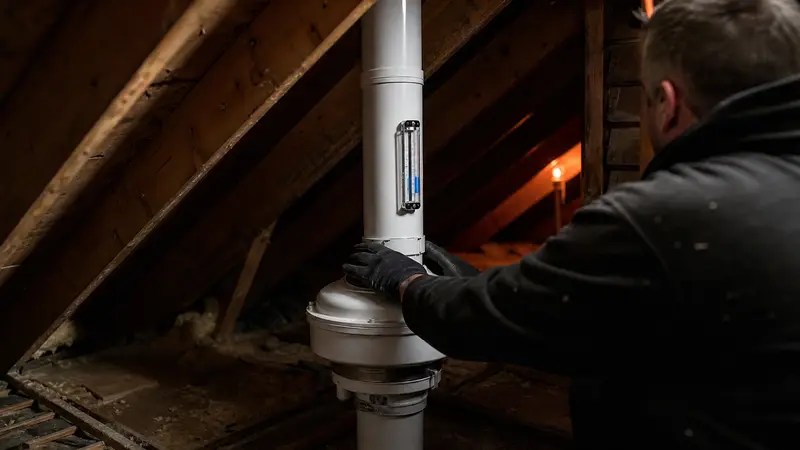
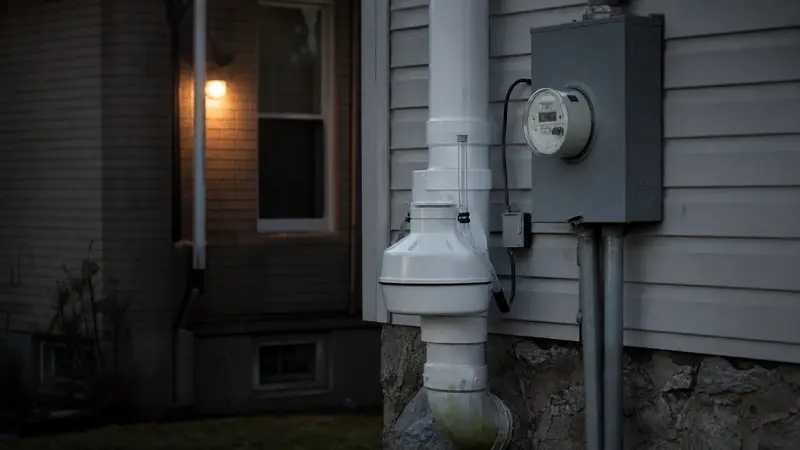
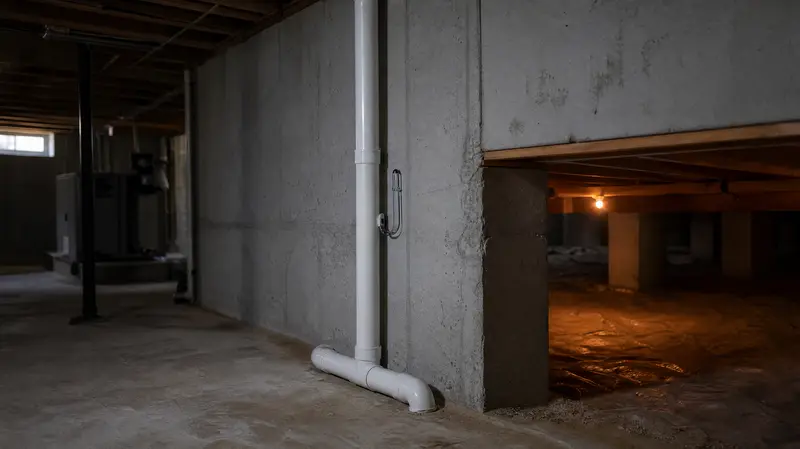
- PVC pipe and fittings. Schedule 40 PVC runs from the suction point to a discharge point above the roofline.
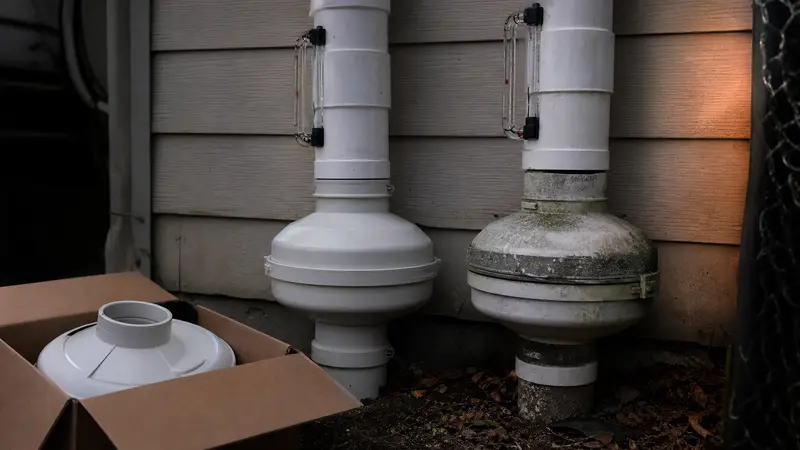
- Radon fan. An inline fan rated for continuous outdoor or attic use, sized to your soil and slab.
- Sealing. Major cracks, floor-wall joints and the sump lid are sealed so the system pulls from under the slab, not from your basement air.
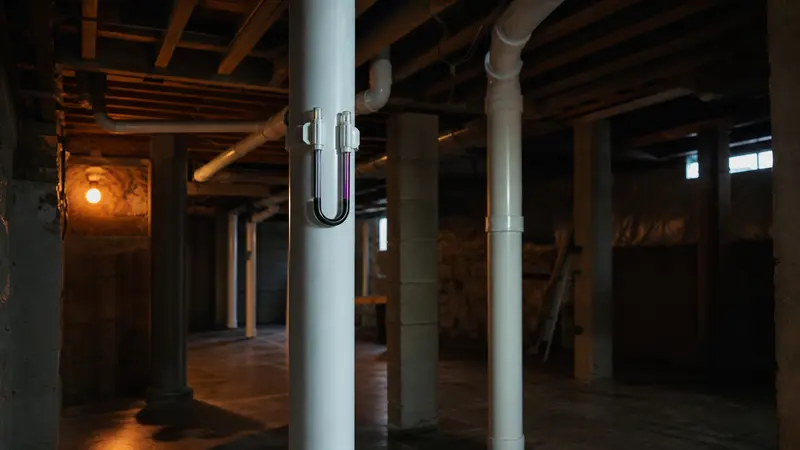
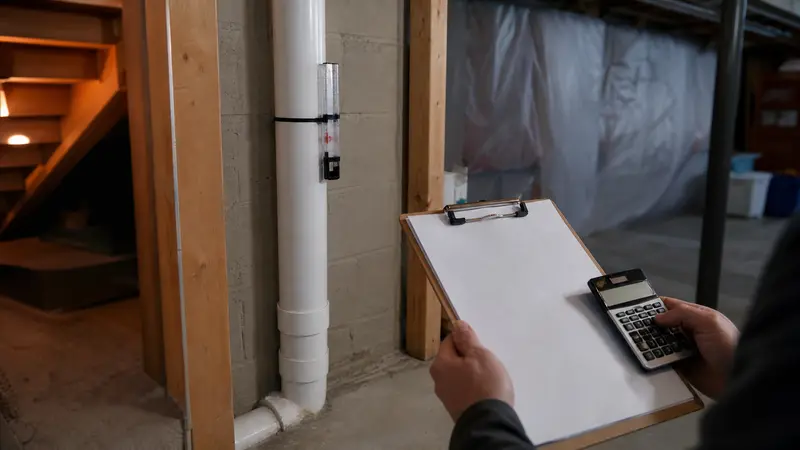
- Manometer and labeling. A U-tube gauge shows the system is running, and a label lists the installer and date.
- Electrical. A dedicated outdoor-rated switch or plug for the fan.
- Post-install clearance test. EPA guidance is to test no sooner than 24 hours after the system starts and within 30 days.
- Written clearance guarantee. If the clearance test is not below 4.0 pCi/L, we keep working at no charge.
If a low quote leaves out sealing, the clearance test, or the guarantee, it is not the same job. Our guide on radon mitigation system installation walks through each step in more detail.
When you need a cost estimate
Most York homeowners ask about price at one of three moments:
- A test came back at or above 4.0 pCi/L. That is the EPA action level. EPA also says to consider fixing levels between 2 and 4 pCi/L.
- You are buying or selling a home. A home inspection radon test has flagged a high result and the clock is running. We schedule around closing dates, and our page on radon mitigation before closing explains how buyers and sellers usually handle it.
- An existing system has a problem. The fan is noisy, the manometer reads zero, or a retest is high. That is usually a repair or fan swap, not a new system.
How we price a job: our process
- Call. Tell us your test result, foundation type and any deadline. We call back the same day.
- On-site visit. We inspect the slab, walls, sump, crawl space and attic or exterior routes.
- Written quote. You get a free written quote with the system design, the number of suction points, the fan model and the pipe route.
- Installation. Most installs are completed in one day.
- Clearance test. We run a post-install test and give you the results in writing.
Cost factors by foundation type
Foundation type is the biggest single driver of price in York. The table below shows how each type usually changes the work. Our price columns are placeholders until the final rate card is set.
| Foundation type | Typical approach | Suction points | What adds cost | Our starting price | Our typical range |
|---|---|---|---|---|---|
| Poured concrete basement | Sub-slab depressurization | Usually 1 | Finished walls, long pipe route | $935 | $935 to $1,320 |
| Concrete block basement | Sub-slab, sometimes block-wall suction | 1 to 2 | Open block cores, extra sealing | $1,050 | $1,050 to $1,600 |
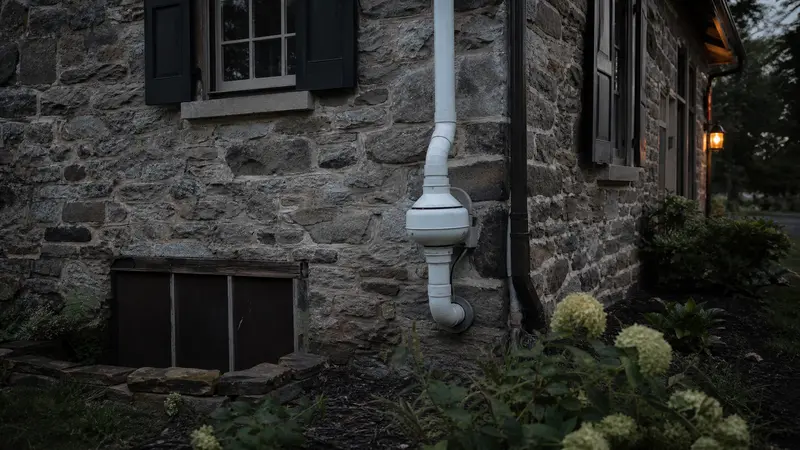
| Fieldstone or rubble basement | Sub-slab plus heavy sealing | 2 or more | Many gaps, uneven or partial slab | $1,200 | $1,200 to $2,200 |
| Slab on grade | Sub-slab from inside or outside | 1 to 2 | Coring through finished floors | $935 | $935 to $1,400 |
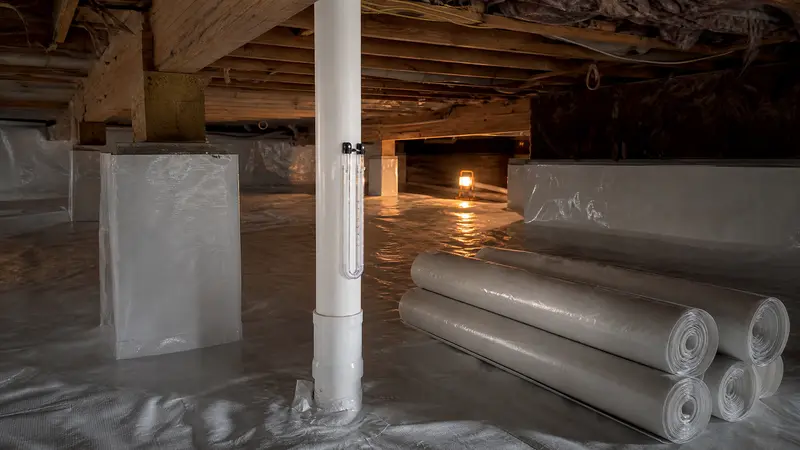
| Crawl space (dirt or gravel) | Sub-membrane depressurization | 1 or more | Membrane area, access, height | $1,200 | $1,200 to $2,500 |
| Basement with sump pit | Sump suction with sealed lid | 1 | Lid type, drain tile layout | $935 | $935 to $1,320 |
| Mixed (basement plus crawl) | Combined sub-slab and sub-membrane | 2 or more | Two systems tied to one fan | $1,500 | $1,500 to $2,600 |
| Passive pipe already installed | Add fan to existing pipe | 0 new | Electrical, attic access | $500 | $500 to $900 |
These are starting points, not final prices. The real number comes from the written quote after we see the house.
What raises or lowers the price
Beyond the foundation, these factors change what you pay:
- Number of suction points. Tight soil or a divided slab may need a second or third point.
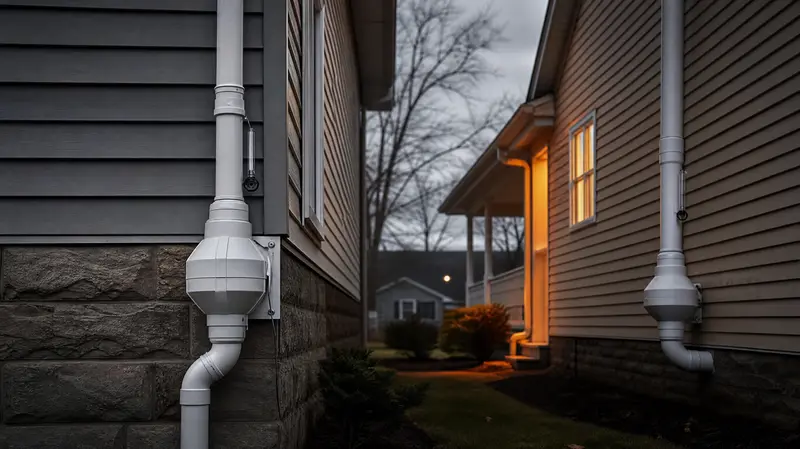
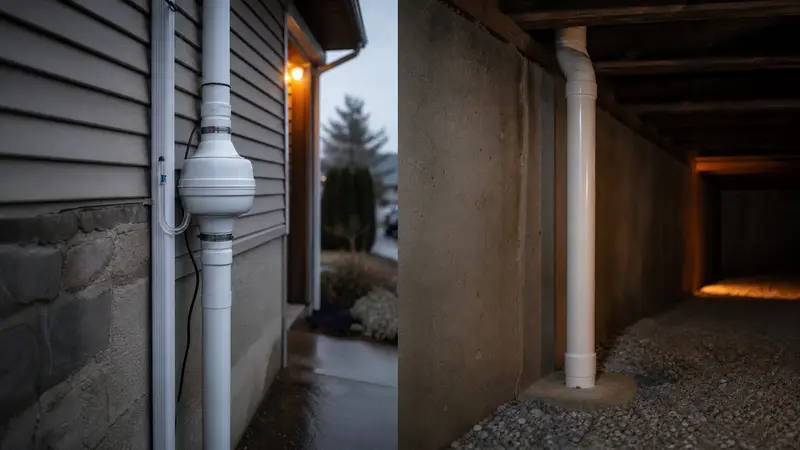
- Pipe route. An exterior route up the side of the house is often simpler. An interior route through a closet and attic takes more labor but hides the pipe.
- Fan size. Larger or higher-suction fans cost more to buy and use more electricity.
- Sealing work. Older stone and block foundations often need far more sealing than poured walls.
- Finished basements. Drywall, flooring and built-ins make access harder.
- Crawl space membranes. A sealed plastic membrane over a dirt floor adds material and labor.
- Electrical. If there is no outlet near the fan location, a circuit or switch adds cost.
- Warranty length. Longer coverage on the fan and system can add to the price.
Related costs to plan for
A few related jobs come with their own price. When a fan wears out, see our guide to radon fan replacement cost. If your home sits over a dirt floor, read about crawl space radon mitigation cost. Newer York homes often have a capped pipe in the basement, which brings down the cost to activate a passive radon system. Business owners and landlords should look at commercial radon mitigation cost. If you are on a private well, radon in water treatment cost is a separate system from the air system.
York context: why local homes vary in price
York County is in EPA Radon Zone 1, the highest radon potential category. Radon is a colorless, odorless radioactive gas made as uranium breaks down in soil and rock, and many York homes sit on geology that produces it.
York also has a wide mix of housing. Older city rowhomes and farmhouses often have fieldstone or rubble foundations that need more sealing and more suction points. Newer subdivisions usually have poured basements, and many have a passive pipe that only needs a fan. That mix is the main reason York quotes cover a wider range than a single national average.
Pennsylvania law requires anyone who tests or mitigates radon for others to be certified by the PA DEP Radon Division under the Radon Certification Act and 25 Pa. Code Chapter 240. An uncertified low bid is not a legal option. Season also matters a little: winter installs are common, and closed-house conditions make winter test results useful for confirming a system works.
Why choose us
DEP-certified installation
Every system we install is designed and installed under Pennsylvania DEP radon mitigation certification. Pennsylvania law requires that certification for anyone who mitigates radon for someone else, and you can look up any installer on the DEP's certified list. That matters for price, because a certified installer has to follow state rules on fan placement, discharge height and labeling. You are paying for a system that passes inspection and holds up when a buyer's inspector looks at it.
A written clearance guarantee
Our quote comes with a written guarantee: if the post-install clearance test is not below 4.0 pCi/L, we keep working at no charge until it is. That puts the risk of an under-built system on us, not on you. It also means the price you see on the written quote is the price for a result, not just for parts and labor. Ask any other installer you are comparing to put the same promise in writing.
Built to national standards
We design systems to follow ANSI/AARST radon mitigation standards, which cover suction point placement, pipe sizing, sealing, fan location and system labeling. Following a published standard keeps quotes comparable, because you know what each line item should include. It also protects resale value, since home inspectors and buyers' agents in York County often check that a system has a working manometer, a proper discharge point and a clear label.
Frequently Asked Questions
Does homeowners insurance cover radon mitigation?
Usually not. Most homeowners policies treat radon as a pre-existing condition or a pollutant and exclude it, so you pay for the system yourself. In a home sale, the buyer and seller negotiate who pays, often through a credit at closing. Check your own policy, and see our guide to the question does homeowners insurance cover radon mitigation.
Is there financial help for radon mitigation in PA?
There is no statewide Pennsylvania grant program for radon systems that we can confirm right now. Some general home repair programs and low-interest home improvement loans may help, depending on income and location. We keep a current list of financial help for radon mitigation in Pennsylvania that you should verify before applying.
Is radon mitigation tax deductible?
Generally not for a primary residence. It is treated as a home improvement, though it may add to your cost basis when you sell. Rental property and certain medical cases follow different rules. This is not tax advice, so ask a tax professional and see our guide to the question is radon mitigation tax deductible.
How much does a radon test cost?
Our professional radon test is $150 to $250, which includes placement, retrieval and a written report. A home kit from a hardware store costs about $20 to $30 plus lab fees, according to PA DEP. Professional tests are the norm for home sales. See our full breakdown of radon testing cost for both options.
How much does it cost to run a radon fan?
Most residential radon fans draw roughly 15 to 150 watts and run all the time. At typical Pennsylvania electric rates, that works out to roughly $2 to $25 a month, depending on the fan and your rate. Our guide on how much it costs to run a radon fan shows the math by fan size.
Why do radon quotes vary so much?
Quotes vary because each house needs a different design. Foundation type, the number of suction points, the pipe route, fan size, the amount of sealing and the warranty all change the price. Two quotes can also include different items. Our guide on why radon mitigation quotes vary shows how to compare them line by line.
Why do older and stone-foundation homes cost more?
Older and stone-foundation homes usually need more suction points and a lot more sealing. Fieldstone walls have many gaps, and slabs may be thin, cracked or partial, so the fan has more area to control. That adds labor and materials. Learn more about why older homes cost more to mitigate in York.
Get your free written quote
Every York home is different, so the best way to know your price is a free written quote after a quick on-site look. Call (717) 356-3035 any time, or request your quote online. We call back the same day, most installs are done in one day, and every system comes with a post-install clearance test and our written guarantee.