On this page
For agents, radon is mostly a timing problem. York County is in EPA Radon Zone 1, so high results are common. The deals that close on time are the ones where the radon test is ordered with the inspection, a written quote arrives fast, and the install and clearance test are scheduled backward from the settlement date.
This guide covers what agents in York should know: the basics, Pennsylvania rules, how radon fits the contingency, and how to time radon mitigation around a closing date so a high result does not delay settlement.
Radon basics for your clients
Your clients will ask the same questions again and again. Here are short, accurate answers:
- What is radon? A colorless, odorless radioactive gas that forms when uranium breaks down in soil and rock.
- Why does it matter? The EPA estimates it is linked to about 21,000 lung cancer deaths a year in the U.S. It is the leading cause of lung cancer among people who have never smoked.
- What number matters? The EPA action level is 4.0 pCi/L. Between 2 and 4 pCi/L, the EPA says to consider fixing the home.
- Is it common here? York County is in EPA Radon Zone 1, the highest-potential zone.
- Can it be fixed? Yes. Most systems install in one day and are confirmed with a follow-up test.
The EPA also offers radon resources for the real estate community that you can share with clients.
Pennsylvania rules agents should know
Certification
Pennsylvania's Radon Certification Act requires anyone who tests or mitigates radon for another person to be certified by PA DEP. That includes home inspectors who run radon tests. Ask for certification numbers and keep them in the file. You can confirm certification through the PA DEP Radon Division.
Testing protocols
Under 25 Pa. Code Chapter 240, certified real estate radon tests must include closed-house conditions, anti-tampering devices, a signed conditions agreement and a posted notice in the home. For tests under 96 hours, closed conditions must start at least 12 hours before the test. Short-term tests run at least 48 hours. Any existing mitigation system must be running during the test.
Seller disclosure
Pennsylvania's Real Estate Seller Disclosure Law (68 Pa.C.S. Sections 7301 to 7315) requires sellers to disclose known material defects, and the standard Seller's Property Disclosure Statement asks about radon tests and systems. Sellers do not have to test, but they must share what they know. If disclosed information becomes inaccurate before settlement, such as a new high test, the law requires the seller to notify the buyer.
How radon fits the agreement of sale
In the standard PAR agreement of sale, radon is one of the inspections a buyer can elect under the inspection contingency. If left blank, the form defaults to a 10-day contingency period. If the buyer sends a written corrective proposal, a 5-day negotiation period follows the end of the contingency period. The buyer can accept the home, terminate, or send a corrective proposal.
A clear radon request in a corrective proposal usually names:
- a PA DEP-certified mitigator,
- a clearance test run at least 24 hours after the system starts,
- a result below 4.0 pCi/L before settlement, and
- delivery of the installer's paperwork and any guarantee.
Working with buyers
- Order the radon test with the inspection. A radon test can take four to five days from booking to report. Waiting can eat the whole contingency period.
- Get a mitigation quote before the proposal. A written number makes the request harder to dismiss.
- Explain the options early. Seller-installed system, credit, price reduction, or accept as is.
- Keep perspective. Help buyers see radon as a fixable issue. If they ask whether a high result should end the deal, our article on is high radon a deal breaker when buying a house is a useful share.
Working with sellers
- Suggest a pre-listing test. In a Zone 1 county, a high result is likely to come up anyway. Testing first gives the seller control.
- Fix before listing when practical. A system with a passing clearance test turns a likely negotiation point into a feature.
- Disclose clearly. Known results and systems go on the disclosure. Attach the reports.
- Respond fast to buyer requests. A same-day written quote helps the seller choose between installing and offering a credit.
- Leave the test alone. Remind sellers and anyone in the home to keep windows closed and not touch the monitor. Suspected tampering damages trust and can sink a deal.
Keeping the closing on schedule
Most radon delays come from waiting, not from the work. A typical before-closing job looks like this:
| Step | Typical timing |
|---|---|
| Written quote | Same day to 2 days |
| Agreement on the fix | Within the negotiation period |
| Install | Usually 1 day |
| Wait before clearance test | At least 24 hours |
| Clearance test | At least 48 hours |
| Results to all parties | Same day to 1 day after test |
If settlement is closer than about a week to ten days after agreement, discuss a credit or a short extension. For listings with tight timelines, line up access, clear the basement near the slab and sump, and book the clearance test in advance.
Existing systems
Many York homes already have radon systems. When you list or show one:
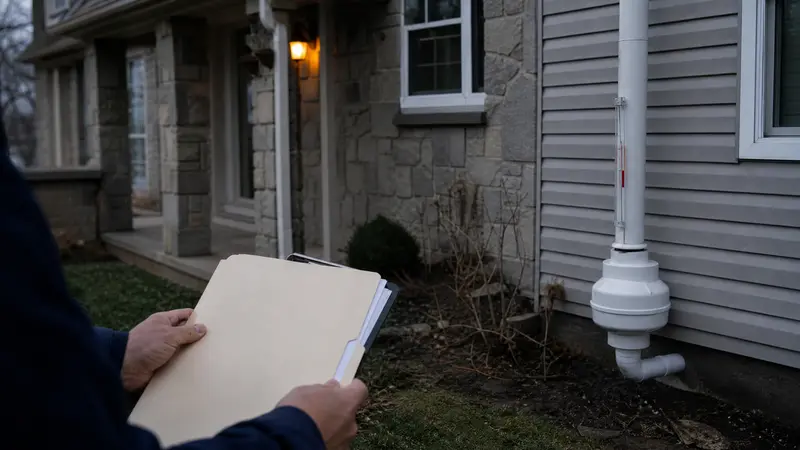
- Check that the manometer shows suction and the fan is running.
- Ask the seller for the original test, the post-mitigation test and the installer's name.
- Recommend a new test as part of the buyer's inspection.
A working system with recent passing results is usually a selling point in Zone 1.
Common problems and quick fixes
- Results arrive after the contingency deadline. Order earlier, or negotiate a longer contingency period in the offer.
- Seller refuses to install. Offer a credit based on a written quote.
- Clearance test fails. Choose installers who guarantee the clearance result in writing and keep working at no charge.
- Lender asks for paperwork. Have the installer send the clearance report and system details straight to the lender and both agents.
- Buyer worries about appearance. Ask the installer about interior routing or painting exterior pipe.
Key takeaways
- In York, radon is common and fixable. Treat it as a scheduling task.
- Use PA DEP-certified testers and mitigators and keep their numbers in the file.
- Order the radon test with the home inspection.
- Get a written quote before the corrective proposal goes out.
- Plan the install and clearance test backward from the settlement date.
Frequently Asked Questions
Should agents recommend a specific radon company?
Many agents give clients a short list of certified providers and let them choose. Check your brokerage's policy on referrals and any required disclosures.
Do new construction homes need radon testing?
Yes. New homes can have high radon too. Some builders install passive radon pipes that can be fitted with a fan if a test comes back high.
Can a radon system be installed in winter?
Yes. Systems can be installed year-round in York, so a winter closing does not have to wait for spring.
Partner with a fast-response mitigator
Agents call us because we answer the phone. We provide radon mitigation for York home sales, with free written quotes, one-day installs for most homes, clearance testing and paperwork sent to both sides. Call (717) 356-3035 any time for a same-day callback.