
On this page
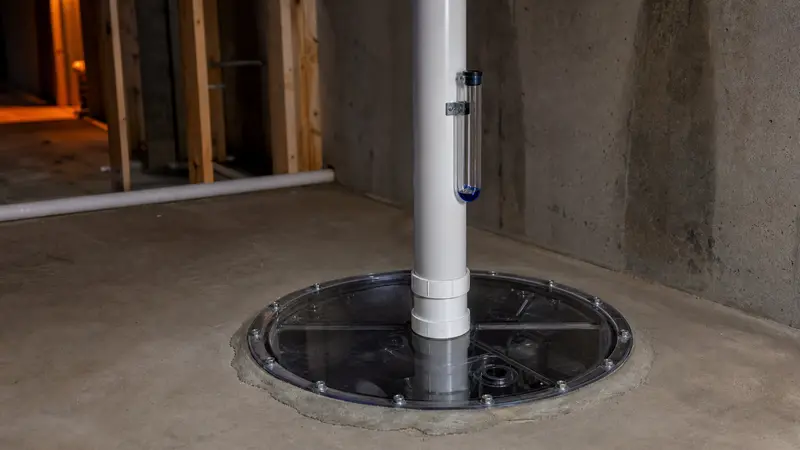
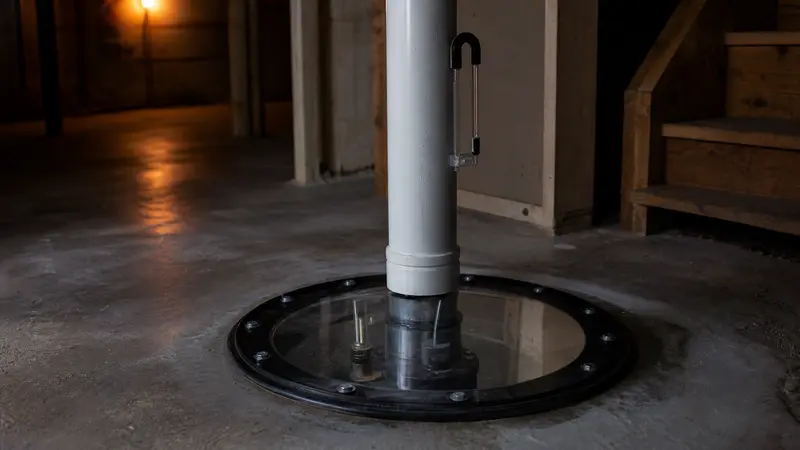
A sump pump radon cover is an airtight lid sealed over your sump pit, with gaskets around the discharge pipe, the power cord and any radon pipe. Most include a clear viewing port so you can watch the pump. The cover stops soil gas from escaping the pit and, in an active sump radon mitigation system, keeps the pit under suction.
Why a regular sump lid is not enough
Many homes have a thin plastic lid that rests on the pit with a notch cut out for the pipe. That keeps out debris, but it is not airtight. Air and soil gas pass easily around the edges and through the notch.
Radon is a gas, so small gaps matter. A radon cover is built to seal, not just to sit on top.
What a good radon sump cover includes
Covers vary by brand and pit size, but a well-made radon cover has these parts:
An airtight lid
Usually rigid plastic, sized to the pit opening, and stiff enough not to flex when the fan pulls a vacuum underneath.
A perimeter seal
The lid is fastened to the floor with screws or anchors and sealed with a gasket, foam tape or a bead of removable sealant. The goal is a tight seal that can still be opened for service.
Sealed pipe and cord ports
The pump discharge pipe passes through a gasketed collar. The power cord and float cord pass through a cord grommet or sealed fitting. These penetrations are the most common leak points on homemade covers.
A viewing port
A clear window lets you see the water level and check that the pump and float are working without breaking the seal. This is a big convenience on systems where the pit is under suction.
A radon pipe connection (when the pit is the suction point)
If the pit is part of the radon system, the cover has a fitting for the PVC suction pipe. The fan then pulls air from the pit and drain tile, not from the basement.
A way to service the pump
The cover must come off. Look for screws, latches or a two-piece design, not a lid glued permanently in place. Our guide to servicing a sump pump with a radon cover walks through how to open and reseal it.
Cover only vs. cover plus a radon system
A sealed cover can be used two ways.
| Setup | What it does | When it fits |
|---|---|---|
| Sealed cover only | Blocks one open entry point | Low radon, or as one part of a larger system |
| Sealed cover as suction point | Pit and drain tile become the system's main suction point | Drain tile loops most or all of the foundation |
| Sealed cover plus separate slab suction | Pit is sealed, but suction comes from a nearby slab hole | Partial tile, tile that drains outside, or a pit that floods |
On its own, a cover is a passive fix. EPA does not recommend sealing alone as a radon fix, because soil gas finds other paths through cracks and joints. If your test is at or above the EPA action level of 4.0 pCi/L, plan on an active system. The cover is a key part of that system, not a substitute for it.
What can go wrong with a sump cover
Even a good cover fails if it is installed poorly. Watch for these issues:
- Unsealed cords. A cord pushed through an open hole leaks air every second the fan runs.
- Flexing lids. A thin lid can bow under suction and break its seal.
- Missing check valve. The pump discharge line should have a working check valve so water does not flow back into the pit.
- No access plan. A lid caulked shut with permanent sealant turns a simple pump swap into a messy job.
- Drain tile that daylights. If the tile drains to the yard, the system can pull outdoor air through it. That outlet may need a one-way valve or a different suction plan.
A manometer on the radon pipe helps you spot problems. If the reading drops toward zero, a seal may have failed or the fan may need attention.
Can I install a radon sump cover myself?
You can install a sealed lid on your own pit. Many hardware stores and radon suppliers sell them. If the cover is part of a radon mitigation system for someone else, though, Pennsylvania requires that work to be done by a PA DEP certified mitigator. The PA DEP Radon Division explains certification.
After any change, test again to see where your radon level stands.
Sump covers in York basements
York County is in EPA Radon Zone 1, the highest potential category, so sump pits here deserve attention. In many local homes the pit collects water from a drain tile loop around the footing. That loop can carry vacuum all the way around the foundation once the pit is sealed. In wet York springs, though, high water in the tile can block airflow, so we check how your pit behaves before choosing it as the suction point.
Key takeaways
- A radon sump cover is airtight, gasketed and removable, unlike a basic lid.
- Look for sealed cord and pipe ports, a viewing port and a lid stiff enough to hold under suction.
- A cover alone blocks one opening. It is not a full radon fix at 4.0 pCi/L or higher.
- In many homes, the sealed pit becomes the suction point for an active system.
- You should always be able to open the cover to service the pump.
Frequently Asked Questions
Do sump radon covers come in standard sizes?
Many fit common round pit sizes, and others are cut to size. Larger or irregular pits may need a custom lid.
How do I know my cover is still sealed?
Check the manometer on your radon pipe. A steady reading suggests a good seal. A drop is a sign to inspect the lid and ports.
Talk to a certified installer
We install sealed sump covers as part of complete radon systems built around your pit and drain tile. Call (717) 356-3035 any time for a same-day callback and a free written quote.