
On this page
Choose a short-term radon test for your home when you need a quick answer, such as during a home sale or for a first screening. Choose a long-term test when you want the truest picture of your average year-round exposure. Short-term tests run 2 to 90 days. Long-term tests run more than 90 days. Many homeowners use both.
What counts as short-term and long-term?
The EPA's Citizen's Guide to Radon splits radon tests into two groups by length:
- Short-term tests stay in your home for 2 to 90 days. Most run 2 to 7 days.
- Long-term tests stay in your home for more than 90 days.
The length matters because radon levels change from day to day and season to season. A longer test averages out more of those swings.
Short-term radon tests
Common devices
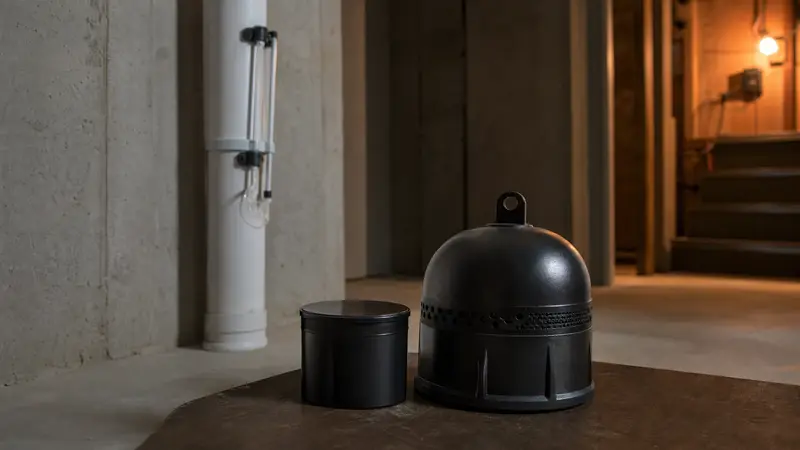
- Continuous radon monitors. Electronic devices that log readings every hour. Professionals use these for home sales.
- Charcoal canisters and pouches. Low-cost kits that absorb radon and go to a lab.
- Electret ion chambers. Devices that measure radon by the drop in an electric charge. Some are set up for short tests, some for long tests.
Pros
- Fast results, often within days
- Fits the short inspection window in a home sale
- Low cost for a first screening
- A professional continuous monitor shows hour-by-hour data
Cons
- Captures only a few days, which may run higher or lower than your yearly average
- Requires closed-house conditions, starting 12 hours before tests under four days
- More sensitive to weather, such as storms and high winds
Long-term radon tests
Common devices
- Alpha track detectors. A small plastic film records tracks left by alpha particles. The lab counts them after the test.
- Long-term electrets. Electret devices set up for longer periods.
Pros
- Closest to your real year-round average exposure
- Averages out weather swings and seasonal changes
- No strict closed-house rules; you live normally with windows as usual
- Low cost for the amount of data
Cons
- Takes at least three months to get a result
- Not practical for a home sale
- Gives one average number, with no hourly detail
Side-by-side comparison
| Factor | Short-term test | Long-term test |
|---|---|---|
| Length | 2 to 90 days | More than 90 days |
| Closed-house conditions | Required for tests under 4 days | Not required |
| Best for | Home sales, fast decisions, first screening | True yearly average |
| Weather effects | Higher | Lower |
| Results | Days | Months |
Which test should you choose?
You are buying or selling a home
Use a short-term test. A professional continuous monitor running at least 48 hours is the usual choice for real estate in Pennsylvania. It gives a fast answer, hourly data and a report from a DEP-certified tester.
You want a first check of your own home
A short-term kit is a fine place to start. If the result is below 2 pCi/L, your risk is lower. If it is between 2 and 4 pCi/L, think about a long-term follow-up. If it is 4.0 or higher, follow up soon.
Your first short-term result was high
The EPA lays out two paths for follow-up:
- Follow up with a long-term test if your first result was close to 4 pCi/L and you want the truest answer. Fix the home if the long-term average is 4 pCi/L or more.
- Follow up with a second short-term test if your first result was well above 4, or you want an answer sooner. Fix the home if the average of the two short-term tests is 4 pCi/L or more.
The higher the first result, the more sense it makes to move quickly. A very high result is not one to wait three months on.
You want to track a mitigation system over time
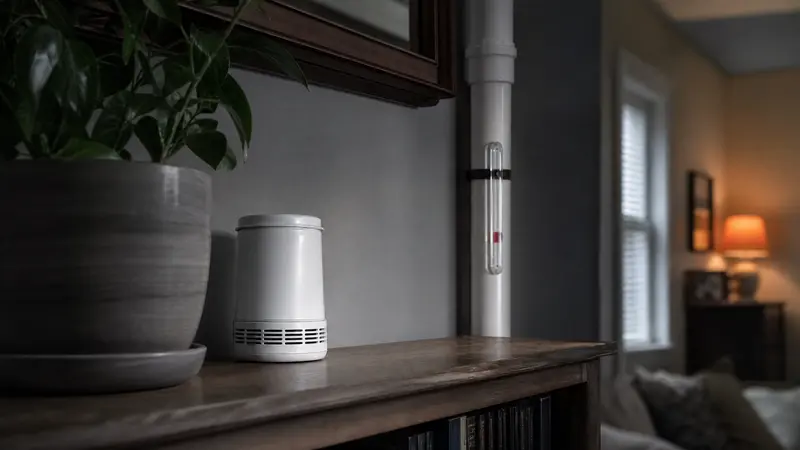
After a system is installed, a short-term clearance test confirms it works. A long-term test later can show how it holds up across seasons. The EPA recommends retesting a mitigated home every two years.
How season affects each test
A short-term test captures the conditions of one week. In a York winter, the house is sealed and the furnace is running, which can push results up. A summer test with frequent door traffic may read lower.
A long-term test smooths those changes out. That is part of why the two types can disagree. Learn more about the best time of year to test for radon and how season affects a single test.
York context
York County is in EPA Radon Zone 1, the highest potential category, and PA DEP reports that about 40% of homes tested in Pennsylvania come back above 4.0 pCi/L. In an area like this, many homeowners start with a short-term test for speed, then use a long-term test to confirm a borderline number.
Key takeaways
- Short-term tests run 2 to 90 days; long-term tests run more than 90 days.
- Short-term tests are best for home sales and quick decisions.
- Long-term tests give the truest year-round average.
- If a first short-term result is 4.0 or higher, follow up with either test type, based on how high it was and how fast you need an answer.
- Short-term tests need closed-house conditions; long-term tests do not.
Frequently Asked Questions
Is a long-term test more accurate?
It is more representative of your yearly average, because it covers more weather and seasons. A short-term test can be just as precise for the days it covers.
Can I run both at the same time?
Yes. Some homeowners run a short-term test for a quick answer while a long-term test runs in the background.
Which test do mitigation companies use after a system install?
A short-term clearance test, run no sooner than 24 hours after the system starts and within 30 days, per EPA guidance.
Book a certified short-term test
If you need a fast, reliable answer, schedule radon testing in York, PA with a professional continuous monitor. Call (717) 356-3035 any time for a same-day callback.