
On this page
A radon system usually works in a damp or wet basement, and it can sometimes help a little with moisture. Damp basements come up often in radon mitigation for older York homes. Water does change the design. Sump pits get airtight covers, drains must keep working, and wet soil under the slab may need extra suction points. Serious flooding should be fixed before or along with the radon work.
Why water and radon often show up together
Water and soil gas use the same paths into a basement. Cracks in the floor, gaps at the wall, open sump pits, floor drains and porous stone or block walls all let in both. So a basement that gets damp is often a basement with plenty of radon entry points.
That does not make radon harder to fix in every case. But it means the installer has to plan for water from the start.
How water changes a radon system
Wet soil blocks airflow
A radon system works by pulling air from the soil or gravel under the slab. Air moves easily through dry gravel. It moves poorly through wet, packed soil, and not at all through standing water.
If the ground under your slab stays wet, the suction from one pipe may not spread very far. The fix is often more suction points, a stronger fan, or using a different collection area, such as a sump pit or perimeter drain.
High water tables
Some homes sit where groundwater rises close to the slab in wet seasons. If water fills the space under the floor, the system loses airflow until it drops. Systems in these homes are often designed to pull from higher points, like the sump or a drain channel, that stay open to air.
Sump pits
An open sump pit is one of the biggest radon entry points in a basement. It connects the room straight to the soil and drain tile.
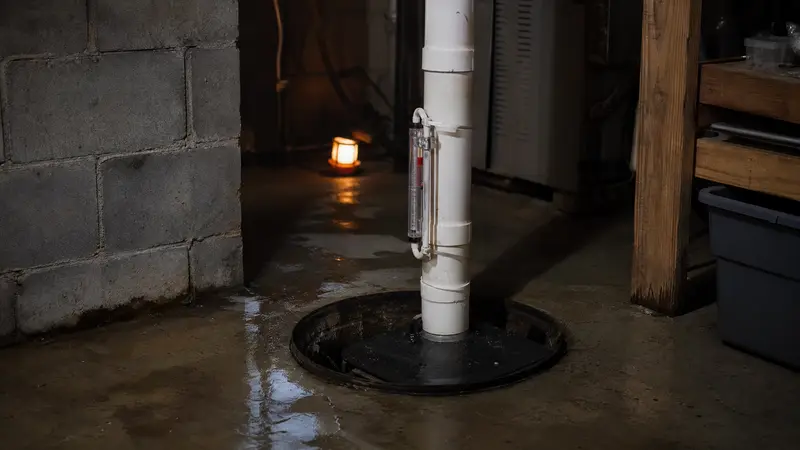
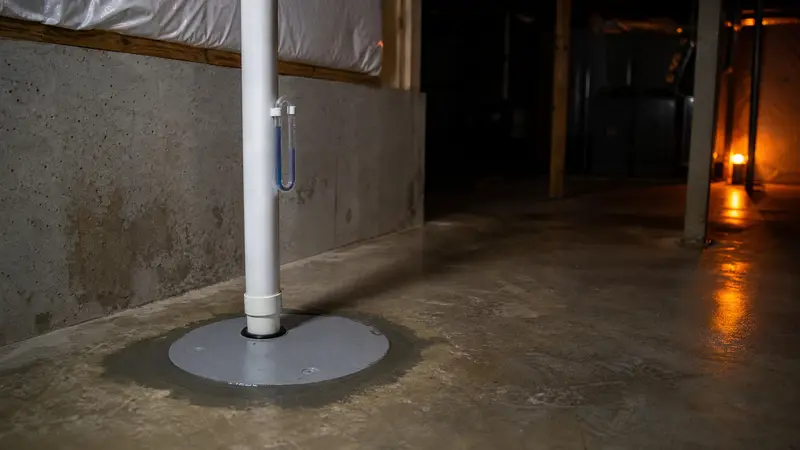
A radon system seals the pit with an airtight cover. The pump still runs, and the discharge pipe and cord pass through sealed fittings. In many homes, the sump pit also serves as a suction point, since it is connected to drain tile around the foundation.
A good cover should have a clear viewing port or removable lid so you can check and service the pump.
Floor drains
Floor drains that connect to the soil or drain tile can leak radon. They get a trap, a one-way drain insert or another seal that still lets water flow in. Drains must never be capped shut.
Interior drain channels and weep holes
Some waterproofing systems use a channel along the wall or weep holes in block. These are open to the soil by design. A radon installer may cover the channel, seal it into the system or treat it as a collection point. The goal is to keep water moving while stopping gas.
Condensation in the radon pipe
Soil gas is humid. As it rises through the pipe in cold weather, it cools and water condenses inside. A properly installed pipe slopes so that water drains back down into the soil, not into the fan. You may hear light dripping or gurgling now and then. That is normal in many systems.
Can a radon system dry out my basement?
Sometimes, a little. The fan pulls air from under the slab, and that air carries some moisture with it. Some homeowners notice less dampness or musty smell. But a radon system is not a waterproofing system. It does not stop liquid water from coming through walls or floors. If you have active leaks, address drainage and grading too.
What to fix first
Use this rough order:
- Standing water or active flooding: fix drainage first, or plan the radon system and waterproofing together.
- Seasonal dampness or a working sump: go ahead with the radon system. The design will include the sump and drains.
- Musty smell, light dampness: a radon system may help, and a dehumidifier can handle the rest.
If you plan to add interior waterproofing later, tell your installer. It is easier to tie a drain channel into the radon system during one project than to rework it later.
Wet basements in older York homes
York's older homes often have fieldstone or block walls, and many show seasonal dampness after heavy rain or snowmelt. Many basements in York also have sump pits. Older homes in historic areas bring their own exterior questions, which we cover in our guide to radon systems on historic homes.
York County is in EPA Radon Zone 1, so a damp basement here should still be tested for radon. The EPA Consumer's Guide to Radon Reduction explains how sump and drain tile suction work as part of a system.
Key takeaways
- Most damp and wet basements can get a working radon system.
- Sump pits get airtight covers, and drains must still flow.
- Wet soil and high water tables may need extra suction points or a sump-based design.
- Pipes are sloped so condensation drains back to the soil.
- A radon system may reduce dampness but does not replace waterproofing.
Frequently Asked Questions
Will a sealed sump cover make my pump fail?
No. The pump runs the same way. The cover just seals the top, with sealed fittings for the pipe and cord.
Should I waterproof before or after radon mitigation?
If you have active leaks, plan both together. Interior drain systems can often be tied into the radon system.
Is gurgling in the radon pipe a problem?
Light dripping is usually normal condensation. Loud or constant gurgling may mean water is pooling and should be checked.
Get a plan for a wet basement
Damp basements are common in older York homes, and they are fixable. Call (717) 356-3035 any time for a same-day callback.