
On this page
- 1. Radon levels change all the time
- 2. Weather and air pressure
- 3. Rain and soil moisture
- 4. Season and the stack effect
- 5. Test placement
- 6. Closed-house conditions
- 7. Test length
- 8. Device type and normal error
- What about house changes?
- Common scenarios
- How to get the clearest answer
- A cheap way to compare
- Key takeaways
- Frequently Asked Questions
- Get a certified result
Indoor radon test results vary because radon levels inside a home change from hour to hour, day to day and season to season. Weather, air pressure, wind, rain, heating, ventilation, test placement, test length and normal device error all play a part. Two valid tests can disagree. A long test or an average of two tests gives the clearest answer.
1. Radon levels change all the time
Radon is not a fixed number for a house. It rises and falls with the conditions that push soil gas into the foundation. Hourly data from a continuous monitor often shows levels climbing at night and dipping in the afternoon. A test that runs Monday to Wednesday can land on a different average than one that runs Thursday to Saturday.
2. Weather and air pressure
When barometric pressure drops, as it often does before a storm, soil gas can move into a house more easily. High winds can also change pressure around the house and pull gas in, or push fresh air through. The EPA advises against running 2 to 3 day tests during severe storms or periods of unusually high winds for this reason.
3. Rain and soil moisture
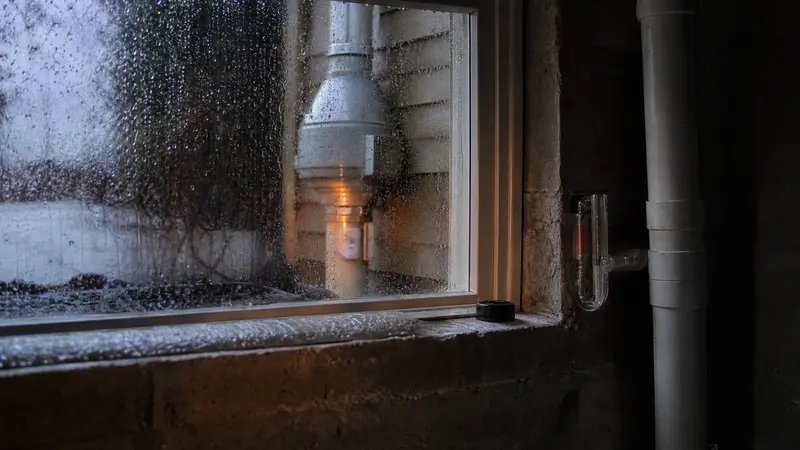
Wet or frozen soil near the surface can trap radon and send more of it toward the house, where the soil under the slab stays drier. After heavy rain, levels inside can rise. Dry spells can have the opposite effect in some homes.
4. Season and the stack effect
In winter, warm air rising inside the house leaks out up high and pulls air, including soil gas, in down low. This stack effect often makes winter results higher. Summer results with open windows often read lower. Air conditioning can change the pattern again.
5. Test placement
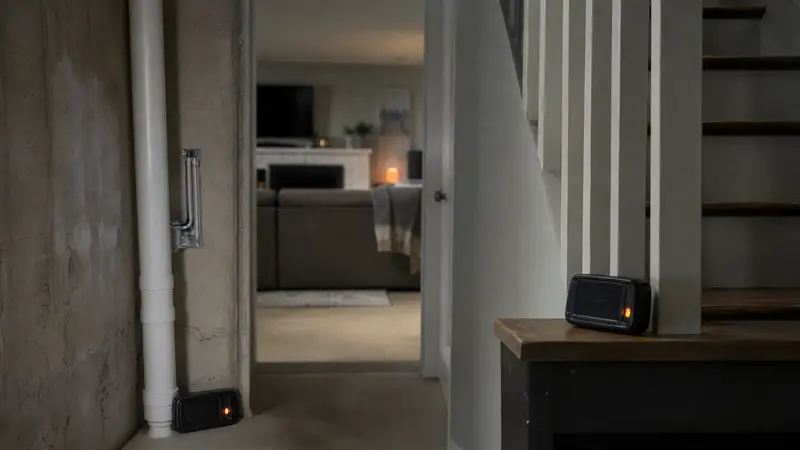
A test in the basement usually reads higher than one on the first floor. A test near a sump pit, a crack in the slab or a floor drain can read higher than one in the middle of the room. A test near a window or door you open can read lower. Two tests in different spots are measuring different air.
6. Closed-house conditions
If windows were open for one test and closed for another, the results will not match. Short-term tests under four days require windows and outside doors closed for 12 hours before and during the test.
7. Test length
A 2-day test catches a short window. A 7-day test averages more swings. A long-term test of more than 90 days averages across weather and seasons. Longer tests usually land closer to your true yearly average.
8. Device type and normal error
Every radon device has a margin of error. Charcoal kits, electrets, alpha track detectors and continuous monitors each work differently. Two devices side by side can differ a bit even when both work properly. Consumer digital monitors add more variation, especially over short periods.
What about house changes?
Some changes alter radon levels for good:
- A new furnace, heat pump or ductwork
- Finishing a basement or sealing it up
- New windows, insulation or air sealing
- Foundation repairs or a new addition
- A failed or turned-off mitigation fan
If your new result is far off from one taken years ago, the house itself may have changed.
Common scenarios
Your test was 3.8 and the buyer's test was 5.2
Both may be valid. They likely ran on different days, maybe in different spots, with different devices. In a home sale, the contract usually spells out which test controls and what happens next.
Your kit said 6 and a professional test said 4.4
Both are above the action level. The difference is within the range you might expect from weather and device variation. The decision is the same: fix the home.
Your digital monitor said 2 but a certified test said 4.5
The monitor may not have had enough time to settle, or it may sit in a different spot. Trust the certified test for decisions.
How to get the clearest answer
- Run tests in the same place if you want to compare them.
- Follow closed-house rules for every short-term test.
- Average two short-term tests. The EPA says to fix the home if the average of two short-term tests is 4 pCi/L or more.
- Run a long-term test for the truest yearly average.
- Use a certified tester when the result matters for a sale or a big decision.
A cheap way to compare
A low-cost kit is an easy second opinion. See our guide to free and low-cost radon test kits in Pennsylvania.
Key takeaways
- Radon levels change constantly, so two valid tests can differ.
- Weather, pressure, rain, season, placement and test length all affect results.
- Every device has a margin of error.
- Average two tests, or run a long-term test, for the clearest picture.
- For decisions, rely on a certified test.
Frequently Asked Questions
How much difference between two tests is normal?
It depends on the levels, the devices and the weather. Short tests run on different days often differ by a noticeable amount, so focus on whether both land above or below 4.0 pCi/L.
Which result should I trust?
Look at the test that followed placement and closed-house rules best. If both did, average them or run a long-term test.
Get a certified result
If you have two numbers that do not agree, book radon testing in York, PA with a continuous monitor and hourly data. Call (717) 356-3035 any time for a same-day callback.