
On this page
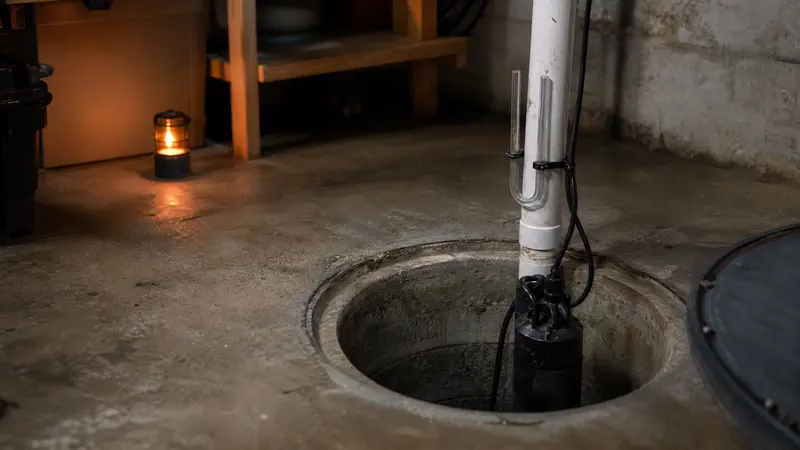
No. A sump pump does not create radon. Radon is a gas that forms naturally as uranium breaks down in the soil and rock under your home. But an open or loosely covered sump pit is a direct opening into that soil, so it can let a lot of radon into your basement. Sealing the pit, a key step in sump pit radon mitigation, closes that path.
Where radon actually comes from
Radon is a colorless, odorless radioactive gas. It is produced as uranium in soil and rock slowly decays. The gas moves up through the ground and enters homes through any gap in the foundation: cracks in the slab, the joint where the floor meets the wall, open block cores, pipe penetrations and, very often, the sump pit.
Your pump is just a motor that moves water. It has nothing to do with making radon. The problem is the hole the pump sits in.
Why an open sump pit is a radon highway
A sump pit is designed to collect water from the soil around your foundation. In many homes, perforated drain tile runs along the footing and empties into the pit. That pipe network is great at gathering water. It is also great at gathering soil gas.
When the pit is open, that soil gas flows straight into your basement air. Several things make it worse:
- Stack effect. Warm air rises and leaks out of the upper parts of your house. That creates slight negative pressure in the basement, which draws soil gas in through the easiest opening.
- Winter heating. The stack effect is strongest when it is cold outside, which is one reason radon levels often run higher in winter.
- Exhaust appliances. Dryers and bath fans push air out, and replacement air can come up through an open pit.
- Size of the opening. A typical pit is a large, open hole compared with a hairline crack.
So while the pump does not cause radon, an open pit can be one of the biggest single entry points in the basement.
Does running the pump make radon worse?
Not in a meaningful way. Readings can shift in wet weather, but that is mostly the weather, not the pump. What matters is whether the pit is open.
How to fix an open sump pit
The fix depends on your radon level.
If your radon level is below 2 pCi/L
A well-sealed, airtight lid is a sensible step. It keeps soil gas, moisture and odors out of the basement, and it keeps kids and pets away from the pit.
If your level is 2 to 4 pCi/L or higher
EPA's action level is 4.0 pCi/L, and EPA says to consider fixing between 2 and 4 pCi/L. At those levels, sealing the pit alone is usually not enough. A lid stops one entry point, but soil gas will still find other cracks and gaps.
The proven fix is an active soil depressurization system. A fan creates suction under the slab so soil gas is pulled to a pipe and vented above the roof. In many York homes, the sealed sump pit itself becomes the suction point, using the drain tile to spread the vacuum around the foundation. Our guide to sealed sump pit covers for radon explains what a good cover looks like.
How to tell if your sump pit is part of the problem
You cannot smell or see radon, so testing is the only way to know your level. A few clues suggest the pit is a major entry point:
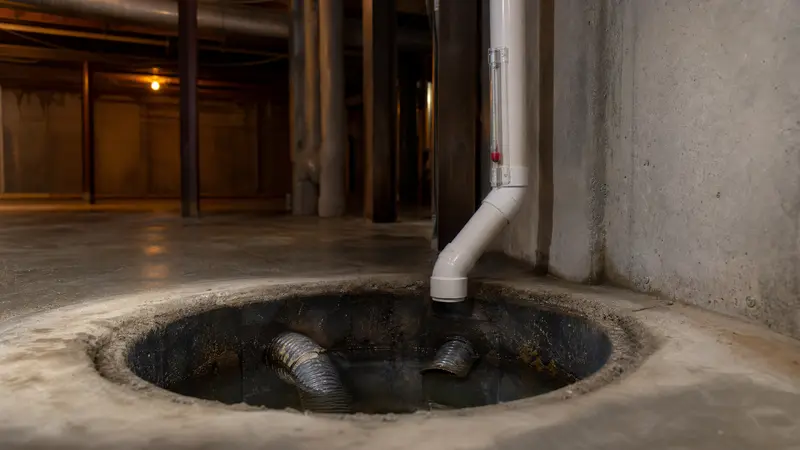
- The pit has no lid, or the lid is a loose plastic disc with gaps around the pipe and cord.
- Drain tile pipes enter the pit from several directions.
- Your basement has a musty, damp smell near the pit.
A radon test tells you whether you have a problem. A certified mitigator can then check how the pit and drain tile connect, and whether the pit is the best place for suction. EPA's A Citizen's Guide to Radon covers testing and next steps in plain language.
Sump pits in York homes
York County sits in EPA Radon Zone 1, the highest radon potential category. Many York homes built with poured or block basements have perimeter drain tile feeding a sump pit. That makes the pit worth a close look in any local radon plan.
Pennsylvania requires anyone who mitigates radon for others to be certified by PA DEP, so ask for a certification number before you hire.
Key takeaways
- A sump pump does not cause radon. Radon comes from uranium decaying in the soil and rock below your home.
- An open sump pit is a large, direct opening into that soil, so it can let in a lot of radon.
- Sealing the pit helps, but at 4.0 pCi/L or higher you usually need an active system too.
- In many homes, the sealed pit and drain tile make an effective suction point.
- Only a test tells you your radon level.
Frequently Asked Questions
Should I put a lid on my sump pit even if my radon is low?
Yes, it is a good idea. An airtight lid keeps soil gas, moisture and odors out of the basement and adds a safety barrier for kids and pets.
Will sealing my sump pit by itself lower radon below 4.0?
Sometimes it helps, but EPA does not recommend sealing alone as a fix because soil gas finds other openings. An active system is the reliable solution.
Get help with your sump pit
If your radon test came back high and you have a sump pit, we can tell you whether it should be your suction point. Call (717) 356-3035 any time for a same-day callback and a free written quote.