
On this page
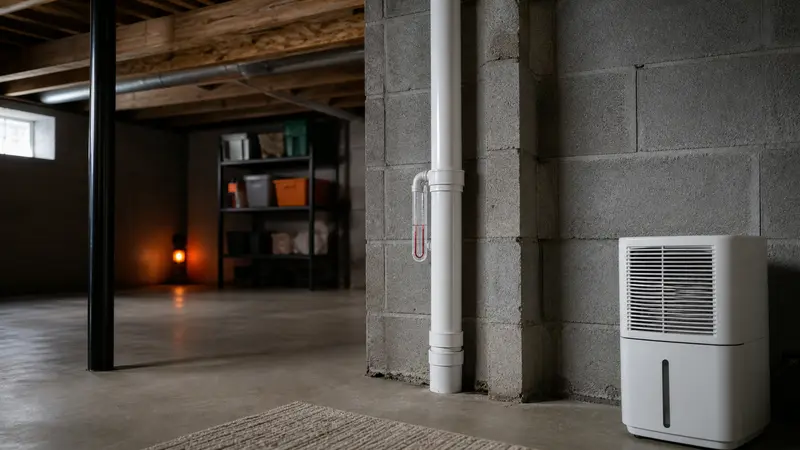
It can help a little. A radon system pulls soil gas from under your slab, and that gas carries some moisture vapor with it. Sealing the sump pit for radon, along with big cracks, also blocks damp soil air. Many basements feel drier afterward. But a radon system is not waterproofing and will not stop leaks or flooding.
Why a radon system can lower basement humidity
Soil under a basement is often damp, and the air in that soil is usually close to saturated. Without a radon system, that air seeps up through cracks, joints and open sump pits. It brings both radon and moisture into the basement.
An active soil depressurization system reverses that flow. The fan creates low pressure under the slab, so soil air moves toward the suction pipe and gets vented outside above the roof. Some of the moisture that would have entered your basement leaves with it.
The sealing work helps too. Closing an open sump pit, sealing the floor and wall joint and covering open block cores all remove paths for damp air.
How much difference does it make?
It varies by home. Some homeowners notice a basement that smells less musty and feels less clammy. Others notice little change. The amount depends on:
- How wet the soil is under and around your foundation
- Whether the sump pit was open before
- How much of the slab the system's suction reaches
- Where the moisture is coming from in the first place
We do not promise a humidity drop as part of a radon system. If you have a specific moisture problem, it needs its own diagnosis.
What a radon system will not fix
A radon system moves air, not water. It will not:
- Stop water leaking through wall cracks or the floor and wall joint during storms
- Prevent flooding when the sump pump fails or cannot keep up
- Fix grading or gutters that send rain toward your foundation
- Dry out a basement where the humidity comes from inside the house, such as a vented dryer leak or poor air circulation
- Replace a dehumidifier in a basement that needs one
Some moisture problems come from summer condensation. Warm, humid outdoor air hits cool basement walls and pipes and condenses. A radon system does not change that. A dehumidifier does.
Moisture, mold and your health
EPA notes that the key to mold control is moisture control. If your basement has visible mold, a musty smell that will not go away or standing water, deal with the water source first. EPA's A Brief Guide to Mold, Moisture and Your Home is a good starting point.
Radon is a separate issue. It is a colorless, odorless radioactive gas with no immediate symptoms. EPA estimates it causes about 21,000 lung cancer deaths a year in the U.S. You cannot tell your radon level by how damp the basement feels. Only a test tells you.
The sump pit connection
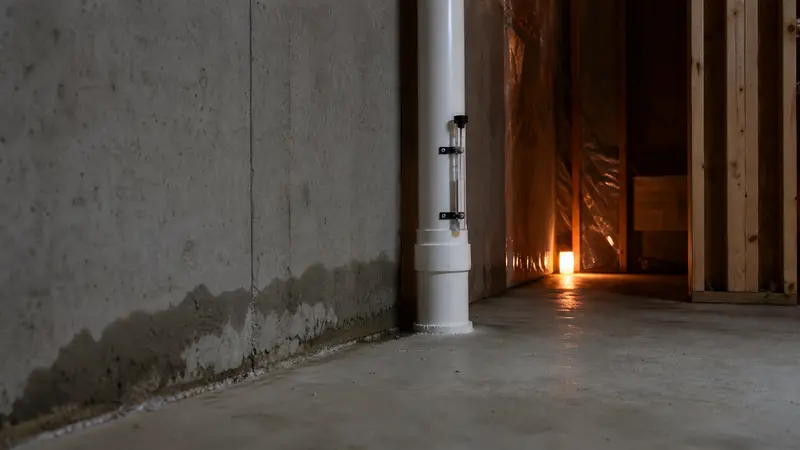
The sump pit is often the link between radon and moisture. An open pit lets both damp air and radon into the basement. A sealed, gasketed cover blocks both. In many homes, the pit then becomes the suction point for the radon system, pulling from the drain tile around the foundation.
If you wonder whether your pump is part of your radon problem, read does a sump pump cause radon. The short answer: the pump does not make radon, but the open pit lets it in.
Basement moisture in York
York County is in EPA Radon Zone 1, and many York basements deal with both radon and seasonal moisture. Spring rain keeps sump pumps busy, and humid summers bring condensation. A radon system can be one part of a drier, healthier basement, alongside good gutters, grading and a dehumidifier where needed.
Key takeaways
- A radon system can lower basement humidity a bit by pulling damp soil air out from under the slab.
- Sealing the sump pit and cracks also blocks moist soil air.
- It is not a waterproofing system and will not stop leaks or flooding.
- Condensation and indoor moisture sources need other fixes, such as a dehumidifier.
- Damp basements and radon are separate problems. Test for radon either way.
Frequently Asked Questions
Should I install a radon system just to fix moisture?
No. Install a radon system to lower radon. If moisture is your main issue, start with gutters, grading, waterproofing or a dehumidifier.
Can a radon system make my basement too dry?
Not usually. The fan vents soil air, not your basement air, so it does not act like a dehumidifier running nonstop.
Do I still need a dehumidifier after a radon system?
Maybe. If your basement humidity stays high in summer, a dehumidifier is still the right tool.
Get radon and your sump pit handled together
If you have a damp basement and a high radon test, we can seal your pit and build the system around it. Call (717) 356-3035 any time for a same-day callback and a free written quote.