
On this page
- Why mixed foundations are common
- Why treating only the basement is not enough
- How a combined system works
- When one fan is enough
- When you need a second suction point or fan
- Moisture in mixed foundations
- Testing a mixed-foundation home
- Mixed foundations in York
- Key takeaways
- Frequently Asked Questions
- Get a plan for your home
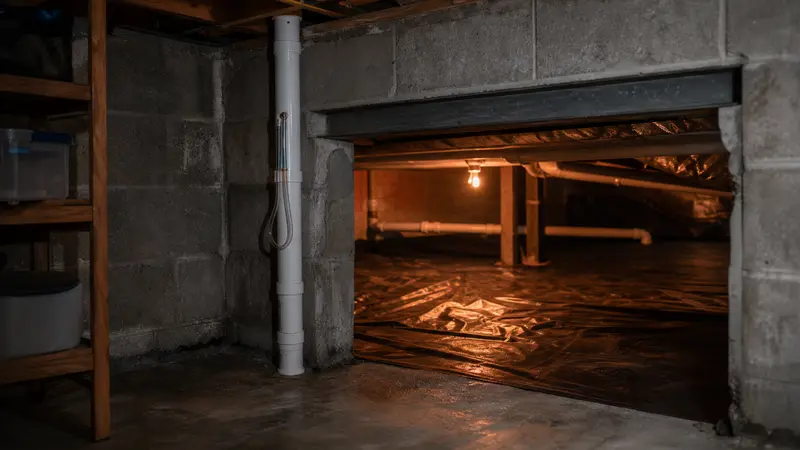
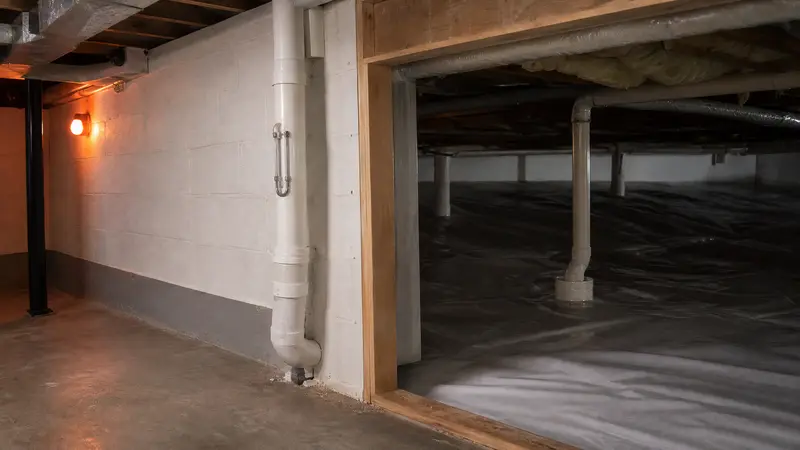
Yes, one radon system can often cover both a basement and a crawl space. A suction point under the basement slab and one under a sealed crawl space radon membrane are piped into a single fan. A second fan is needed only when the areas do not connect well or the load is too much for one fan.
Why mixed foundations are common
Many homes have more than one foundation type. You may have a basement under the main house and a crawl space under:
- A rear addition or kitchen bump-out.
- A sunroom or enclosed porch.
- An older section of the house that was never dug out.
- A family room added in a later decade.
Each part touches the soil in its own way. The basement has a concrete slab and walls. The crawl space usually has dirt, gravel or loose plastic. Radon can enter through both, and a fix that treats only one leaves the other open.
Why treating only the basement is not enough
A standard sub-slab system pulls soil gas from under the basement floor. The suction may reach a little way under the footing toward the crawl space, but the footing and wall usually block it. Meanwhile, the crawl space soil keeps releasing radon into the crawl space air, which flows into the house through floor gaps, ducts and plumbing holes.
Treating only the crawl space has the same problem in reverse. Each area needs its own suction.
How a combined system works
A combined system has:
- A sub-slab suction point in the basement. A hole through the slab with a small pit dug out under it.
- A sealed membrane in the crawl space, with a suction point under it. This is sub-membrane depressurization.
- Pipes from both points that join together, usually in the basement or along an exterior wall.
- One fan mounted outside the living space, sized to pull from both points.
- One discharge above the roof edge.
The basement pipe and crawl space pipe meet at a tee and share the rest of the run. The fan pulls from both, and the installer checks suction at each point.
When one fan is enough
One fan usually works when:
- The basement slab has gravel or loose soil under it, so suction spreads well.
- The crawl space is a moderate size and the membrane is well sealed.
- The pipe runs from both areas are short enough to join without much loss.
When you need a second suction point or fan
A second suction point or a second fan may be needed when:
- The basement soil is tight. Packed clay or no gravel under the slab can limit how far one point reaches, so the basement itself needs two points.
- The crawl space is large or divided by footings, so one point under the membrane does not cover it all.
- The areas are far apart. A crawl space on the far side of the house may need its own pipe route.
- The first clearance test is still high. Adding a suction point is a common fix.
A good installer tests suction at each point during the job and adjusts before leaving.
Moisture in mixed foundations
Crawl spaces in mixed-foundation homes are often damp, and the basement next to them may be too. Many homeowners choose to seal the crawl space vents and add a dehumidifier while the membrane goes in. Before you seal vents, read our guide to do crawl space vents reduce radon, which covers the trade-offs.
Testing a mixed-foundation home
Test in the lowest lived-in level. In a mixed home, that is usually the basement if you use it, or the first floor above the crawl space if you do not. After mitigation, the clearance test should be run no sooner than 24 hours after the fan starts and within 30 days, as the EPA recommends. The EPA's Citizen's Guide to Radon has more on test placement.
Mixed foundations in York
Many York homes have grown over the years, with additions and sunrooms built on crawl spaces next to older basements. Older city homes may have a stone or block basement with a crawl space under a rear addition. York County is in EPA Radon Zone 1, and in Pennsylvania only a PA DEP certified mitigator can install a system for you.
Key takeaways
- Basements and crawl spaces each need their own suction.
- One fan can often serve both through a shared pipe.
- Tight soil, large or divided crawl spaces, and distance may call for more suction points or a second fan.
- The crawl space needs a sealed membrane, not loose plastic.
- A clearance test confirms the whole home is covered.
Frequently Asked Questions
Does a combined system cost more than a basement-only system?
Usually, because of the membrane and extra suction point. It costs less than two separate systems.
Can I add the crawl space later?
Yes, if the fan has room for it. Mention it at the start so the installer can size the fan and plan the pipe route.
Will one fan use more electricity for two areas?
Sometimes a slightly larger fan is used, but it is still one fan running instead of two.
Get a plan for your home
Homes with a basement and a crawl space are common in York, and they can be handled in one visit. Call (717) 356-3035 any time for a same-day callback and a free written quote.